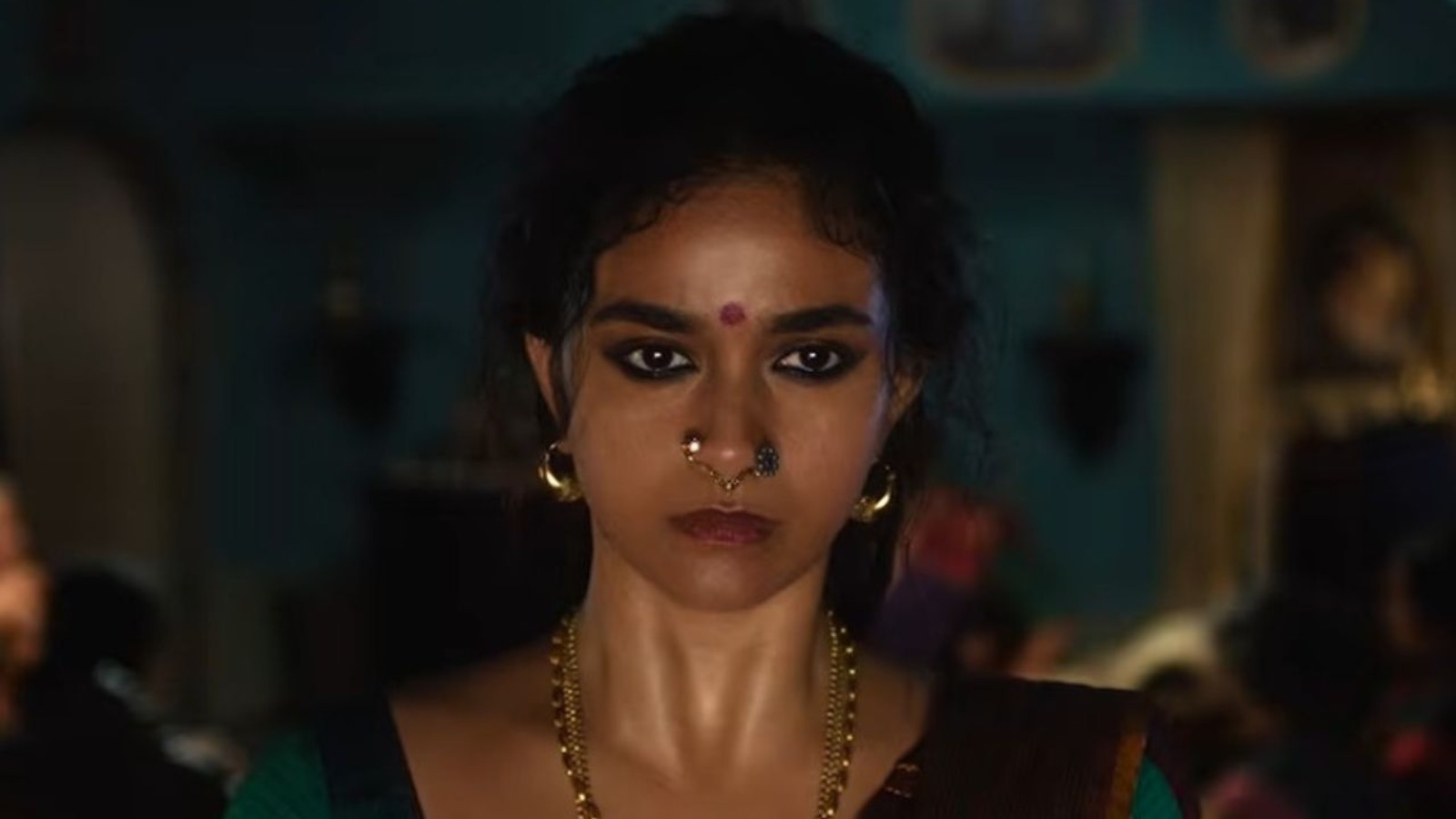
What happens when women control an empire for centuries and men are relegated to subordinate positions? Does such a society become more just, or does power continue to breed the same rivalries, betrayals and thirst for dominance? These are some of the questions that make Akka an interesting proposition.
Written and directed by Dharmaraj Shetty and produced by YRF Entertainment, the five-episode Netflix series imagines an 800-year-old matriarchal society in the fictional Indian city of Pernuru. At a time when mainstream commercial cinema continues to rely heavily on male-dominated narratives, Akka attempts to build an entire world around powerful women who control its social, political and criminal systems.
It is undoubtedly a commendable attempt, particularly in an industry in which women-centric commercial projects are sometimes reduced to glamour and skin show. Here, women are not merely supporting characters or romantic interests. They occupy positions of authority, make consequential decisions and engage in power struggles that determine the fate of their empire.
However, while the idea is refreshing, the execution is not always equally effective. Akka has the ingredients for a compelling drama, but inconsistent writing prevents it from making the impact it deserves.
Also read on Akka
When women control the world
The series revolves around Bhavani, played by Keerthy Suresh, who is positioned to inherit the power and legacy of Pernuru. Her authority comes under threat with the arrival of Rudra, portrayed by Radhika Apte, whose mission to challenge the established order sets the narrative in motion.
The conflict between these two women forms the backbone of the series. While Bhavani represents a system that has survived for generations, Rudra emerges as a formidable challenger with her own ambitions and reasons for dismantling it.
Their confrontation raises an interesting question: can a system that has existed for centuries withstand the arrival of someone determined to expose its vulnerabilities?
The setting also distinguishes Akka from conventional gangster dramas. Instead of presenting the familiar world of male gangsters and their struggles for dominance, Dharmaraj Shetty places women at the centre of the criminal empire. Men operate within this hierarchy, often serving the interests of those who hold power.
This reversal of the traditional gender structure gives the series a distinctive identity. Yet its most interesting possibility lies beyond the novelty of women ruling a society. The real question is whether changing the identity of those in power changes the nature of power itself.
A bold idea that needed stronger writing
One of the most interesting aspects of Akka is its suggestion that a society ruled by women is not necessarily free from injustice or human weaknesses. Betrayal, vengeance, ambition and personal rivalries remain part of this world. The women who control the empire are not immune to greed or manipulation, and the system they have built is not beyond challenge.
This is where the series could have offered a deeper examination of its premise. A matriarchal society is an intriguing starting point, but the narrative needed to explore its contradictions more effectively to deliver a genuinely powerful commentary on gender and authority.
Unfortunately, the writing is the series' biggest drawback. The result is a series in which viewers can appreciate the ambition behind world-building without always feeling equally invested in what happens within that world.
A tighter screenplay and stronger character development could have made the rivalry between Bhavani and Rudra far more gripping. Their confrontation deserved greater dramatic weight, particularly given the stakes involved in protecting or dismantling an empire that has survived for centuries.
Keerthy Suresh and Radhika Apte lead from the front
The performances are among the strongest aspects of Akka. Keerthy Suresh brings authority to Bhavani, a woman who must protect her position while navigating the challenges confronting her empire. The character demands a combination of strength and emotional vulnerability, and Keerthy makes a commendable effort to convey both dimensions.
Radhika Apte is equally effective as Rudra, bringing intensity to a character who threatens to destabilise the established order. Her presence adds tension to the narrative, particularly as the conflict between the two women escalates.
The performances help sustain audience interest even when the screenplay loses momentum. Both actors bring distinct energies to their characters, making the central conflict one of the series' most engaging elements.
Poornima Indrajith and Pooja Mohanraj also deliver commendable performances, while Vishak Nair gets a substantial role and makes his presence felt.
The ensemble deserves credit for lending credibility to a fictional world that requires viewers to accept an unconventional social hierarchy.
Technical strengths, missed opportunities
The technical execution contributes considerably to the series' appeal. The production design helps establish Pernuru as a distinctive world, while the period atmosphere adds to the visual identity of the narrative.
The action sequences are another positive feature. They bring energy to the power struggles and reinforce the ruthless environment in which the characters operate.
The makers have clearly attempted to create a world that extends beyond the central rivalry. However, technical finesse and an ambitious production design can only take a series so far when the writing does not consistently match its visual ambition.
With a more focused narrative, these technical strengths could have supported a much more immersive and emotionally engaging experience.
Women in power, but an underpowered narrative
Akka deserves recognition for attempting something different within the familiar territory of gangster dramas. Dharmaraj Shetty's decision to build the story around a matriarchal society gives the series a refreshing premise, while Keerthy Suresh and Radhika Apte deliver performances that strengthen its central conflict.
More importantly, the series opens up an interesting conversation about women, authority and the nature of power. It challenges the assumption that merely replacing men with women at the top of a hierarchy is enough to create a fundamentally different society.
However, the writing does not fully explore the potential of this idea. The uneven screenplay and occasionally disjointed storytelling prevent the series from becoming the gripping drama it could have been.
*All 5 episodes of Akka are streaming on Netflix*