When I watched Bachelor Party in 2012, I remember wondering, "What kind of movie is this? It was a film that felt different from what I was used to watching in Malayalam. Maybe I didn't have enough exposure to films at that point to fully understand what Amal Neerad was attempting, but the film certainly left an impression.
The original Bachelor Party wasn't a box-office success, although its makers claimed to have made profits through other avenues. Over the years, however, the film seems to have developed a cult following. The kind of discussions and negativity surrounding its spiritual sequel, Bachelor Party Deux, made me realise that the original had a fan base.
Released 12 years later, Bachelor Party Deux is a spiritual sequel that doesn't pretend to be anything else. It carries the same flavour, the same mood, the same visual language and almost the same cinematic template as its predecessor. Amal Neerad hasn't attempted to reinvent the universe. He has simply brought another group of characters into it.
And honestly, that is both the film's strength and its limitation.
A new gang, the same old world
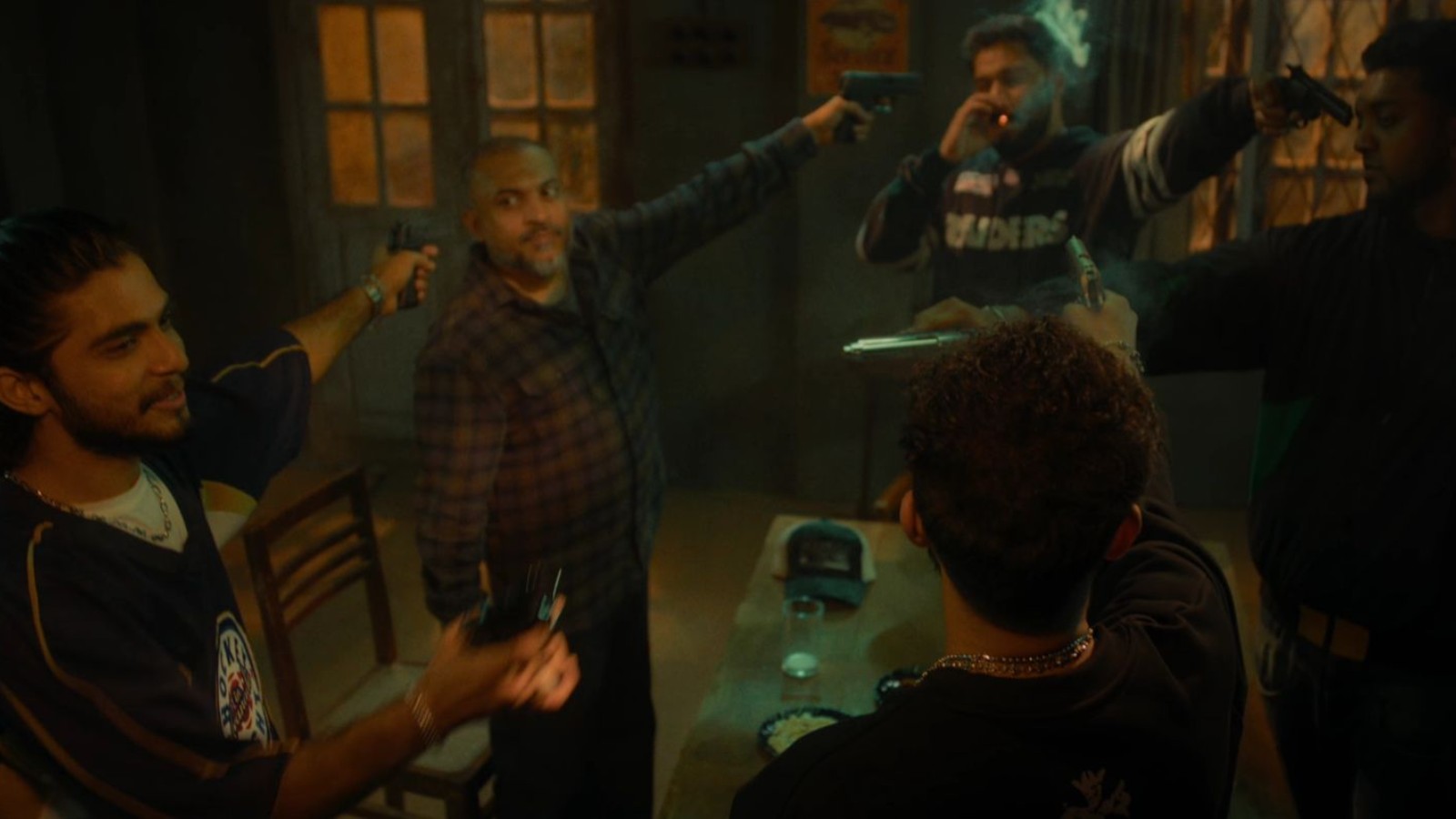
The original Bachelor Party was an adaptation of the Hong Kong film Exiled. Bachelor Party Deux, on the other hand, is written by Amal Neerad and Unni R. Set around a bunch of youngsters from Fort Kochi, the film follows a group of petty criminals, pickpockets and local goons who survive through shady dealings and assignments.
These aren't people with conventional jobs or ambitions. They belong to a world where crime is a way of life, rivalries are inevitable and revenge is often the driving force behind the choices they make. Amal Neerad takes this familiar gangster territory and builds a narrative around different gangs, their conflicts and the circumstances that pull them into trouble.
There isn't much that feels particularly new in terms of storytelling. We know the territory, we understand the characters and we can anticipate the direction in which the narrative is heading. But Amal Neerad isn't particularly interested in making this a plot-heavy film. He is more invested in the mood, the attitude and the world inhabited by these characters.
Brotherhood is the real connection
The most striking similarity between the two films isn't the violence, the adult humour or the stylish filmmaking. It is the brotherhood among the characters. The original had Kalabhavan Mani, Rahman, Indrajith, Asif Ali and Vinayakan forming a gang with its own chemistry and conflicts. Bachelor Party Deux brings together Naslen, Soubin Shahir, Sreenath Bhasi, Sharafudheen, Chandu Salim Kumar and others in a similar setup. Tovino Thomas appears in an extended cameo role.
They argue, fight, disagree and sometimes find themselves on different sides. But underneath all that, there is a strong sense of belonging. They might not always agree with one another, but they are bound by a relationship that goes beyond friendship. They are soul brothers, shaped by the same circumstances and connected by an unwritten loyalty.
The orphanage background shared by the characters in both films is another interesting commonality. These are people who don't necessarily have a conventional family to fall back on, and the gang becomes their family. That sense of brotherhood is the emotional thread running through both films, even though Amal Neerad doesn't make it overly sentimental.
Amal Neerad doesn't change his flavour
The film also retains the crude, unapologetic humour of the original. Double-meaning jokes, sexual references and conversations that are very much the kind of stuff men talk about among themselves are part of the package. It isn't trying to be politically correct or appeal to everyone, and the film remains true to the kind of characters it has created.
The visual style, music, atmosphere and character presentation are all familiar Amal Neerad territory. Bachelor Party Deux is a film that relies on its style and mood as much as its story. And if you have enjoyed his filmmaking in the past, there is enough here to keep you engaged.
But familiarity can also become a limitation. When the same treatment, attitude and narrative flavour are carried forward, it becomes difficult to see what the film is adding beyond revisiting a universe that already exists. Bachelor Party Deux doesn't bring any significant new dimension to the original. It simply carries forward its essence.
The film versus the social media verdict
What I found more intriguing than the film itself was the hostility surrounding it even before its release. The original Bachelor Party was never a box-office blockbuster, but its cult following seems to have grown over time. That doesn't mean the sequel automatically deserves the same admiration, nor does it mean it should be dismissed even before audiences watch it.
I feel some of the negativity surrounding Bachelor Party Deux could also be linked to the expectations and frustrations surrounding Amal Neerad as a filmmaker. There has been a long-standing demand for Bilal, a sequel to Mammootty’s Big B and the expectations surrounding that project have almost become a separate conversation. When a filmmaker is constantly expected to deliver a particular film, every other project can become a target for misplaced disappointment.
Social media has also become a place where films are judged even before they reach theatres. Genuine criticism is welcome, but when criticism turns into targeted negativity, fan wars and attempts to dictate what a filmmaker or actor should do next, it becomes counterproductive. The same platforms that can help a film gain attention can also create an atmosphere that works against it.
Bachelor Party Deux may or may not work for everyone, but it deserves to be judged for what it is rather than what people expected Amal Neerad to make.
Not a reinvention, just another Bachelor Party
Bachelor Party Deux is not a game-changer. It is not a film that expands the original universe in a meaningful way, nor does it bring anything particularly fresh to Amal Neerad's gangster storytelling. It is essentially the same film in a different setting, with a new gang, new characters and the same cinematic flavour.
But that doesn't make it a film that deserves to be hated. It is an Amal Neerad film that sticks to its own style, and there is a certain honesty in not trying to turn it into something it was never meant to be.
The problem with Bachelor Party Deux is not that Amal Neerad made the same kind of film again. The problem is that he made the same kind of film again without giving us enough reasons to remember it beyond its style. But that is a film criticism. Deciding that a film deserves to fail even before watching it is something else entirely.