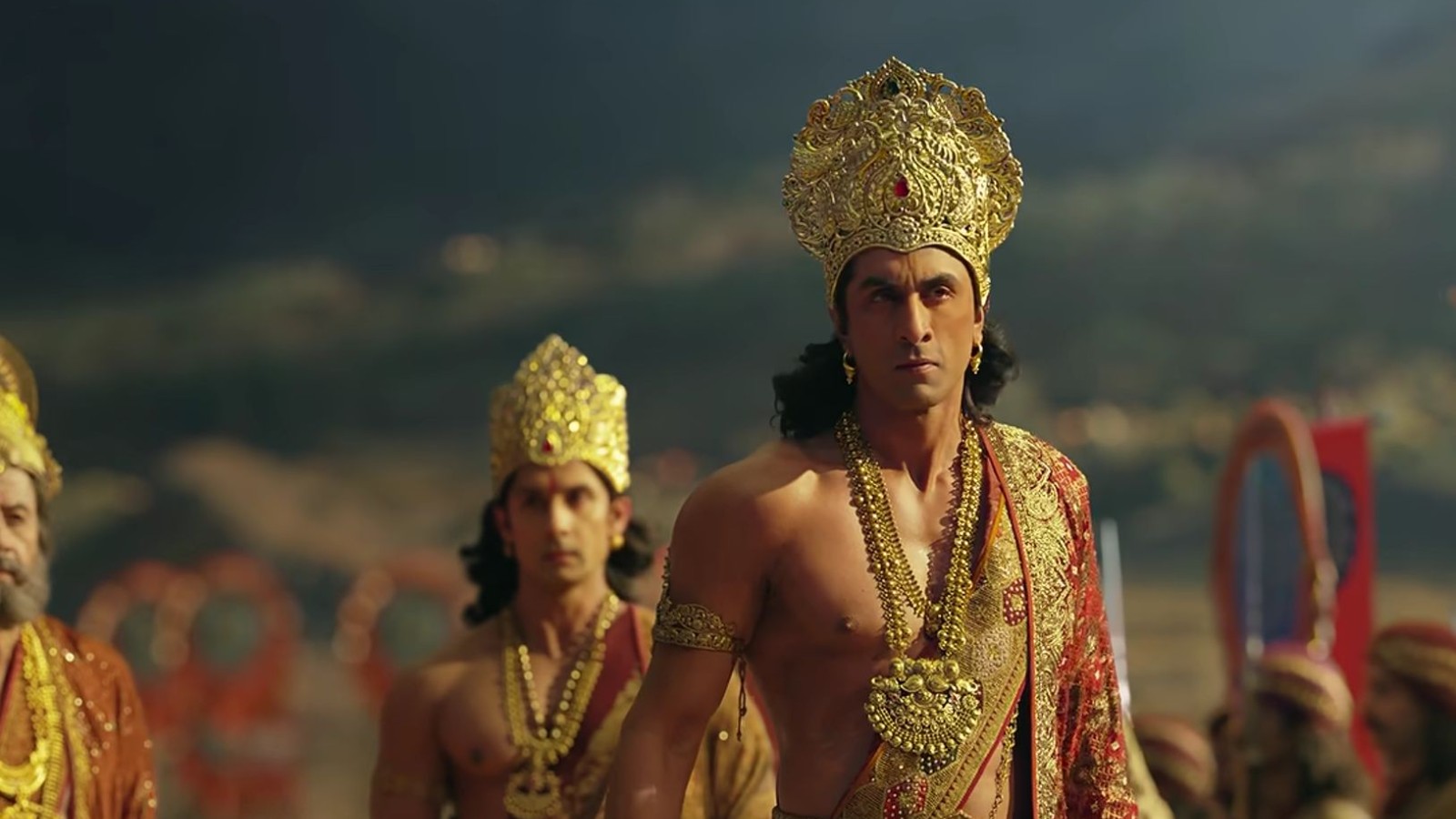
There are stories that cinema can never quite exhaust, and the Ramayana is certainly one of them. Told, retold, interpreted and reimagined across generations, the Hindu epic has travelled through cinema, television, theatre and practically every conceivable art form. Its characters are familiar, its conflicts well established, and its eventual destination hardly a mystery. So, when Nitesh Tiwari’s ambitious adaptation was announced, the inevitable question was: what new could it possibly bring to a story that has been told so many times? Beyond the multi-crore spectacle and a casting coup that sees stars with leading-man credentials occupying supporting roles, Ramayana: Part 1 settles for something considerably more straightforward, an honest retelling of the epic. It is both the film’s safest bet and, perhaps, its most likeable quality.
With little in the way of conventional suspense, twists or unexpected turns to offer, the film finds other ways to hold attention. Perspectives, smaller details and carefully assembled production values become its principal storytelling devices. After all, when the destination is already known to much of the audience, the journey and the manner in which it is presented become considerably more important. Interestingly, the film does not begin with Rama, the righteous reincarnation of Lord Vishnu, but with the making of his eventual adversary.
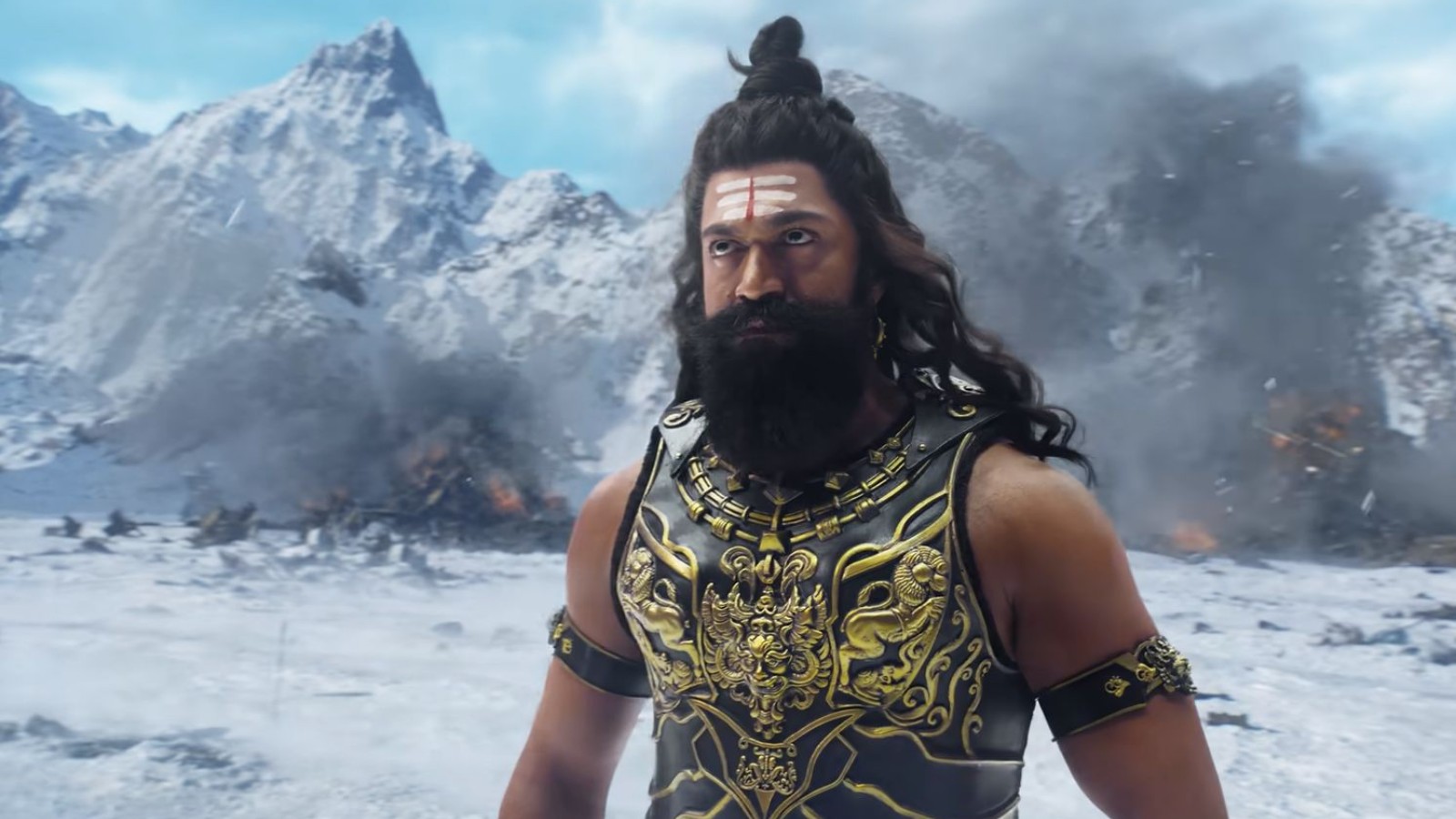
The narrative first turns its attention to Ravana, the formidable king of Lanka, and the circumstances that shape him into the figure mythology remembers. A wonderfully majestic Yash brings considerable presence to the character, particularly during the sequence in which Ravana undertakes an extraordinarily prolonged penance in pursuit of a boon that would make him almost impossible to destroy. The film also makes room for his mother Kaikesi's influence, establishing how the man he eventually becomes is shaped by the encouragement and ambitions surrounding him. Watching Ravana's journey towards becoming the crowned king of Lanka gives the character an introduction that is as imposing as it is purposeful.
Rama, meanwhile, receives a comparatively subdued introduction. It is an interesting narrative choice to establish Ravana before introducing the film's central protagonist, but the restraint with which the latter is welcomed into the cinematic world is equally telling. Rather than immediately leaning into grandiosity, the film allows its introduction to remain measured. It is a choice that establishes the film's larger temperament: the storytelling is light enough to make the weight of the source material accessible, without losing sight of the reverence the epic commands.
For the most part, Ramayana remains firmly committed to its established narrative. Its creative liberties are largely confined to smaller pockets, where familiar imagery is given a slightly different cinematic interpretation.
The way Ravana's ten heads are represented is one such instance, reflecting how even today, each one of us possess multiple personalities within oneself. Another is the treatment of Sita, who, as someone born into a warrior clan and raised within a royal household, is shown to possess the ability to fight and defend herself. It is a welcome departure from earlier portrayals that have not always foregrounded this aspect of her character. There is, after all, little reason to imagine that a princess belonging to a ruling clan would be entirely unfamiliar with the art of defence or sword fighting.
These choices do not necessarily rewrite the epic, but they lend its familiar characters dimensions that feel relevant to contemporary audiences. The film also finds room for humour, slipping in lighter moments without allowing them to overstay their welcome. The comedy is neither disruptive nor particularly intrusive, functioning instead as a breather within an otherwise weighty narrative.
That said, Ramayana does not always rise above the territory of decent, competent storytelling. For all its scale and the occasional flashes of creative interpretation, it rarely attempts to push its narrative towards something extraordinary. There are, however, thoughtful crevices within the writing that suggest an awareness of how audiences today might engage with these characters. Sita momentarily siding with Shurpanakha is one such instance, offering a perspective that goes beyond the straightforward binaries traditionally associated with the story. Similarly, the film is careful in how it presents Ravana, allowing the audience to understand the circumstances that shaped him without necessarily asking them to sympathise with his actions.
Ultimately, Ramayana: Part 1 does not appear particularly interested in competing with the many versions that have preceded it through radical reinvention. Instead, it places its faith in the familiarity of the source material, the strength of its casting and the assurance of its production values. The result is a film that is earnest, occasionally inventive and largely restrained in its storytelling ambitions. Perhaps an epic of this magnitude deserves a cinematic interpretation that reaches beyond the comfort of familiarity. But there is something to be said about a film that understands the weight of the story it is telling and does not constantly attempt to overwhelm it. Ramayana: Part 1 may not reinvent the epic, but it makes a fairly likeable case for telling it once again, adding some expectations on the second part that will feature Hanuman’s presence (as shown in the post credits).