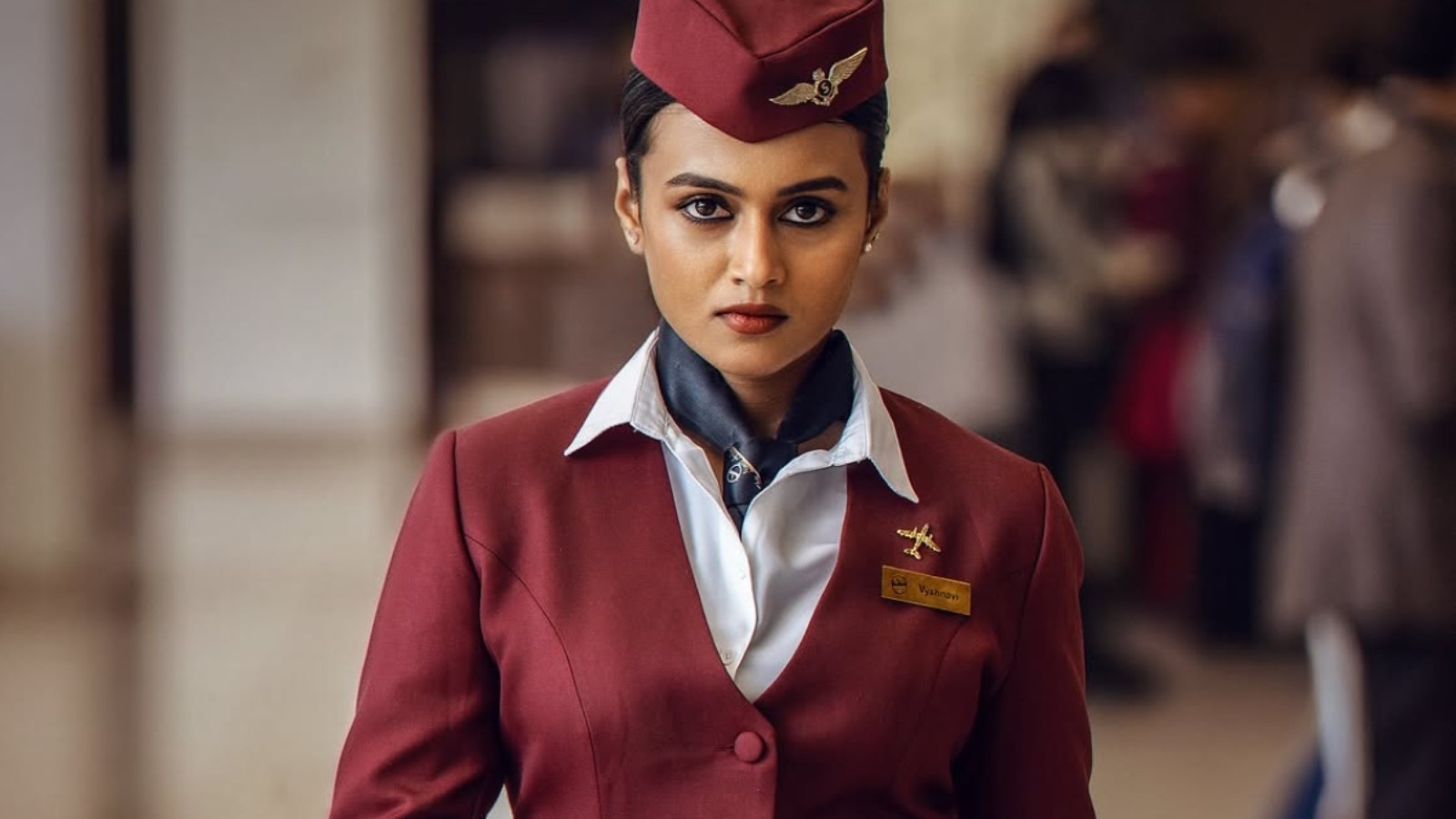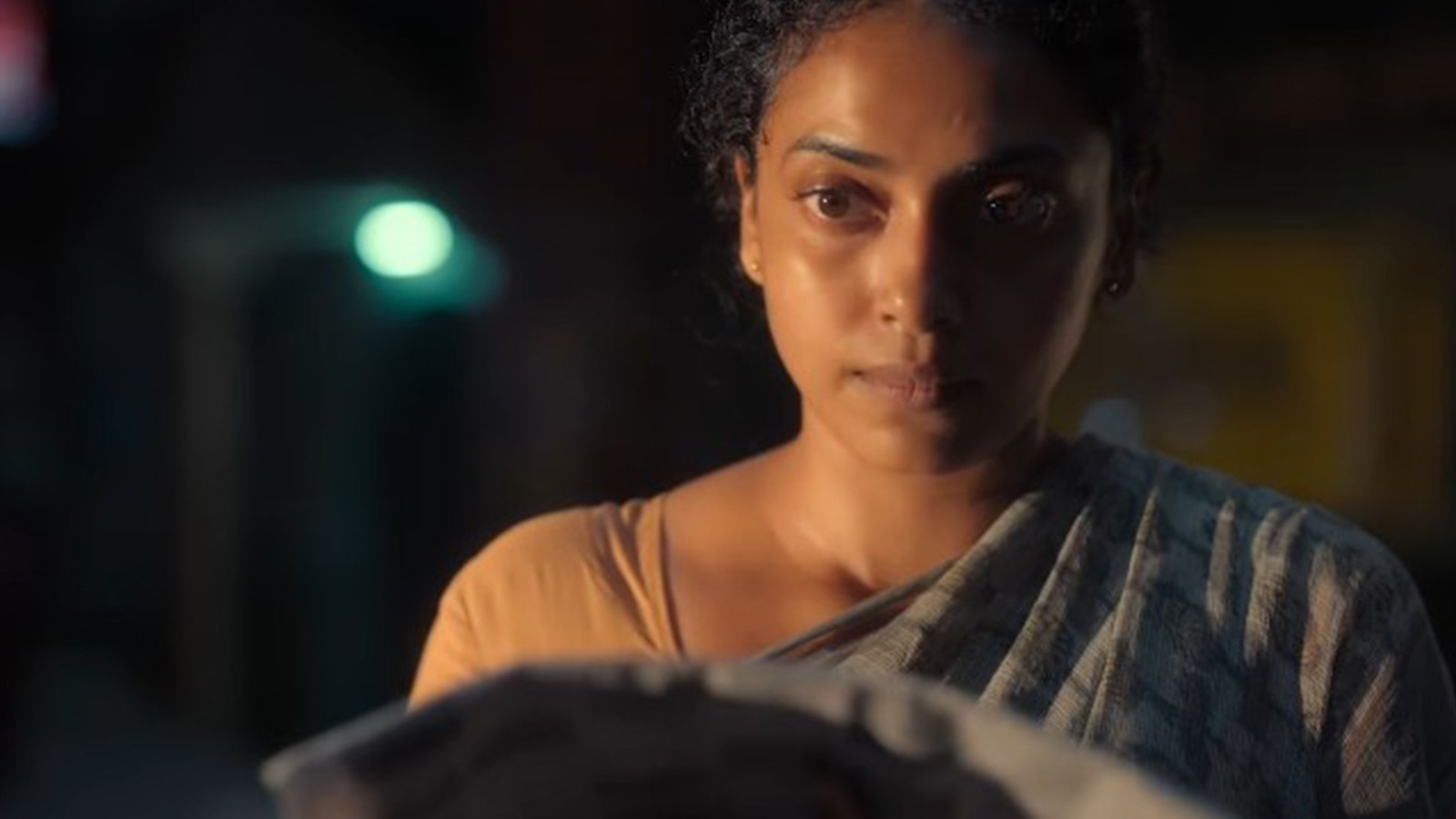
When Manjummel Boys maker Chidambaram introduced his new film Balan The Boy, the spotlight was firmly on debutant Farzana Palathingal. In the film about a mother and son, she played the mother, whose disappearance is at the heart of Balan The Boy. During its theatrical run, Farzana’s performance received widespread praise and now, as the film gears up for a July 31 OTT release on Zee5, the stage is set for a wider set of audience to experience her haunting performance.
In a conversation with The Cinema Post, she opens up about the experience of working on her debut film, the journey of making Balan, and her thoughts on cinema and acting, among others. Excerpts from the chat…
Balan is your debut film. Did you ever imagine your first film would receive such appreciation?
A: Absolutely not. When I first dreamt of acting in a film, my only focus was on getting that one opportunity. I never thought beyond that - whether the film would become successful, whether audiences would like it, or how they would respond to my character. None of those thoughts crossed my mind.
So, this overwhelming response has come as a complete surprise, and I'm incredibly happy and grateful. Of course, with a team like this, I knew people would be excited to watch the film. For me, the real stars of Balan were Chidambaram, Jithu Madhavan, Sushin Syam and Shyju Khalid. They were the biggest attraction. I never imagined anything beyond simply being part of such an extraordinary team. The film's success truly belongs to everyone who worked on it.
How did Balan happen?
My mother sent me an Instagram post about an offline audition. At the time, I was living in Mumbai and was busy with other commitments, so I wasn't sure if I could travel to Kochi. I thought I would try another time. Later, the team announced an online audition, and my mother sent me that as well. I kept thinking about it, but somehow never got around to submitting my application.
Then something interesting happened. Amarbir Bajwa, a casting director in Mumbai whom I had met a few years ago, contacted me. He said that actor Ganapathy, who is also a casting director in Kerala, was looking for actors for a Malayalam film and asked whether I would be interested in sending an introduction video and some photographs.
I found it fascinating that both my mother and someone I hadn't spoken to in years were pointing me towards the same opportunity. I took it as a sign. I thought, ‘Why not give it a shot?
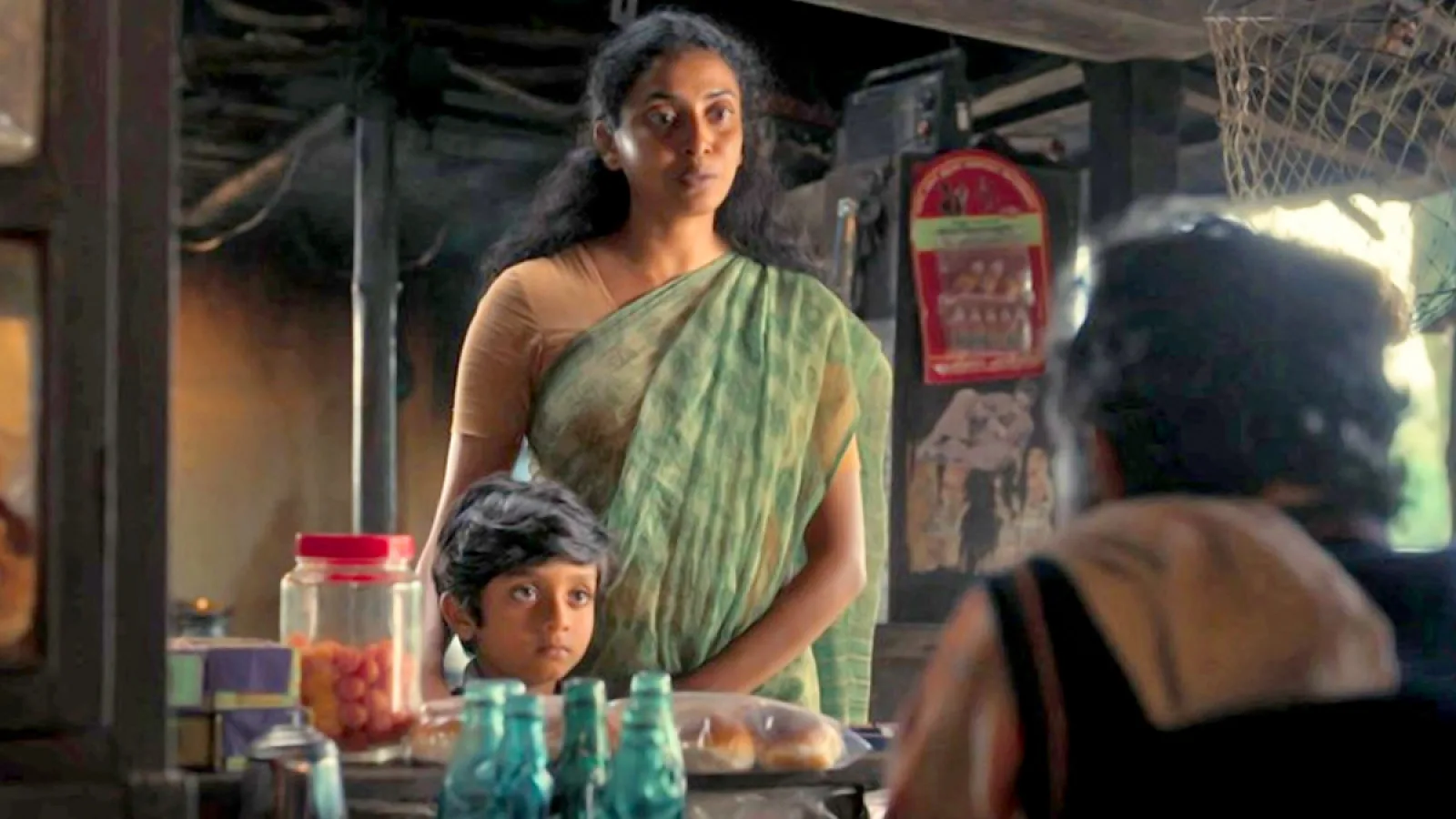 A still from Balan The Boy
Soon after, Ganapathy called me and sent two scenes for the audition. I performed and submitted them. Around two or three weeks later, I was invited to Kochi, where we did screen tests with the child artiste Adhiseshan to see whether we shared a natural chemistry and were comfortable working together. That's how my journey with Balan began.
Chidambaram said he chose you because of your expressive eyes. Do you think the eyes play a crucial role in acting?
Absolutely. Especially in a film like Balan, where silence speaks louder than words. My character, Amma, often communicates without dialogue. She suppresses her emotions, chooses her words carefully and rarely expresses herself openly. In such moments, the eyes naturally become an important medium of expression.
That said, I never consciously tried to act with my eyes. My focus was always on understanding the emotional subtext of every scene - what Amma was thinking, what she was feeling, what she was hiding and what motivated her actions. Once I understood her inner world completely, everything else - the expressions, the eyes and the body language, came naturally.
Before entering films, you worked in theatre and as an occupational therapist. How did those experiences shape you as an actor?
Theatre has had a tremendous influence on me. On stage, you're building a character from the ground up. You're not acting only with your face, you use your entire body, and your performance has to reach even the person sitting in the last row of the auditorium. That process gave me the tools to build a character from within. Jithu Madhavan's script had already provided everything I needed, but theatre helped me imagine who Amma was beyond what was written. I knew how she would walk, speak and behave in her everyday life. More importantly, theatre taught me the importance of understanding subtext, creating a backstory and building chemistry with fellow actors. Those lessons have stayed with me.
My work as an occupational therapist also helped immensely. Working with children teaches you two invaluable qualities, empathy and observation. Empathy allowed me to understand Amma without judging her. She isn't simply good or bad; she's an extremely layered character. If you judge your character, you can't portray them honestly. You have to understand where they're coming from before you can do justice to the role.
Observation was equally important. Amma is constantly observing her surroundings because she's living in survival mode. My experience as an occupational therapist sharpened those observational skills, and I believe that naturally found its way into my performance.
Your character constantly shifts between different identities and emotional states. Did you consciously think about those transitions?
Yes, I often wondered about Amma's life. I asked myself where her ability to create so many different identities came from. Was she someone who loved stories? Did she read a lot? Was she well educated?
As she moved from one identity to another, I imagined that there was a performative side to her personality. Those questions helped me understand her psychological journey and made each version of Amma feel distinct while still remaining the same person.
What convinced you to accept Balan, especially since many actresses hesitate to play a mother's role early in their careers?
When I heard the story, I completely fell in love with Amma. She is such a layered character with so many shades that, as an actor, I felt it was a gift. There was so much for me to explore and discover.
I never looked at it as playing a mother; insead, it was about doing a fascinating character. As an actor, I want to do every kind of role as long as it challenges me. It could be a mother, a grandmother or even a tree (laughs). I genuinely don't mind.
And funnily the thing that gave me most joy in playing a character like this, is the fact that she is grey. There is no right or wrong there, it is just your perception as a viewer.
How challenging was it to portray a mother with such emotional complexity in your very first film?
For me, the biggest preparation was observing real-life mothers and their relationships with their children. I spent time watching Adi (Adhiseshan) and his mother before the shoot. I observed how they interacted, how they communicated, and the warmth they shared. That gave me a very natural reference point.
I also believe I've always had strong maternal instincts. I have two younger brothers, and growing up I was almost like a second mother to them. Along with my own mother, I was deeply involved in taking care of them, so nurturing came naturally to me.
At the same time, I knew I couldn't fully understand what it feels like to be a mother because I haven't experienced motherhood myself. One thing that helped was watching a documentary about a woman giving birth to her son in prison. It helped me imagine Amma's life before the events of “Balan”. That became the emotional foundation on which I built the character.
How was your experience working with the entire team of Balan?
It was an incredible experience. Some of my fondest memories are from the house in Wayanad. Lunch breaks were always so much fun. Dolly chechi, who played Ammamma, would read everyone's palms and tell us the funniest stories.
Adhiseshan is an exceptionally patient and generous child. He's so authentic, always himself, and an extraordinary actor. Working with Chidambaram was a wonderful experience because he gave me the freedom to explore. When you trust your director completely, you know they'll guide you whenever you make a mistake. That kind of trust gives an actor the confidence to take creative risks.
Shyju Ikka (Shyju Khalid, Cinematographer) was equally amazing. He has such a calm and positive energy and was deeply involved throughout the process. Watching the creative understanding between Chidambaram and Shyju Khalid was truly inspiring. They complemented each other beautifully and were deeply involved throughout the process. Watching the creative understanding between Chidambaram and Shyju Khalid was truly inspiring.
Audiences have praised your performance as one of the film's biggest strengths…
I feel incredibly happy and grateful. More than the compliments, what means the most to me is that audiences are connected with the characters and the story. They understood each character for who they were instead of judging them at face value. If people feel that I have done justice to my character, that's the greatest compliment I could receive.
Which scene from Balan is closest to your heart?
My favourite scene is when Balan, after growing up, returns to Ammamma's house. The condition of the house, combined with the haunting background score, made it incredibly emotional for me. It reminded me of how it would feel if we had the chance to revisit our own childhood homes years later. The memories are still there, but the moments and the people who filled those spaces have changed. That sense of nostalgia and loss really stayed with me, and it's probably my favourite moment in the film.