Dorothy movie plot:
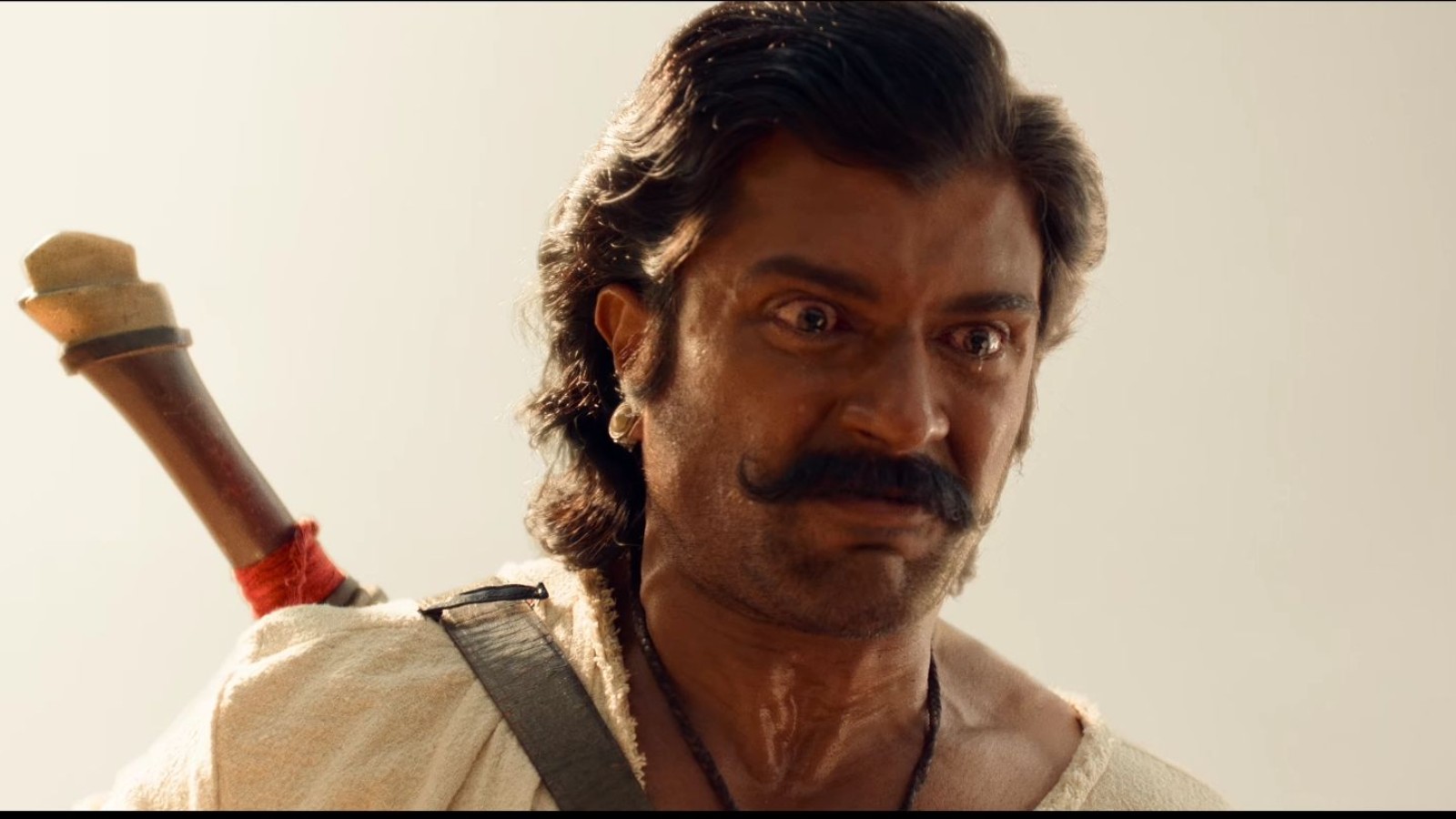
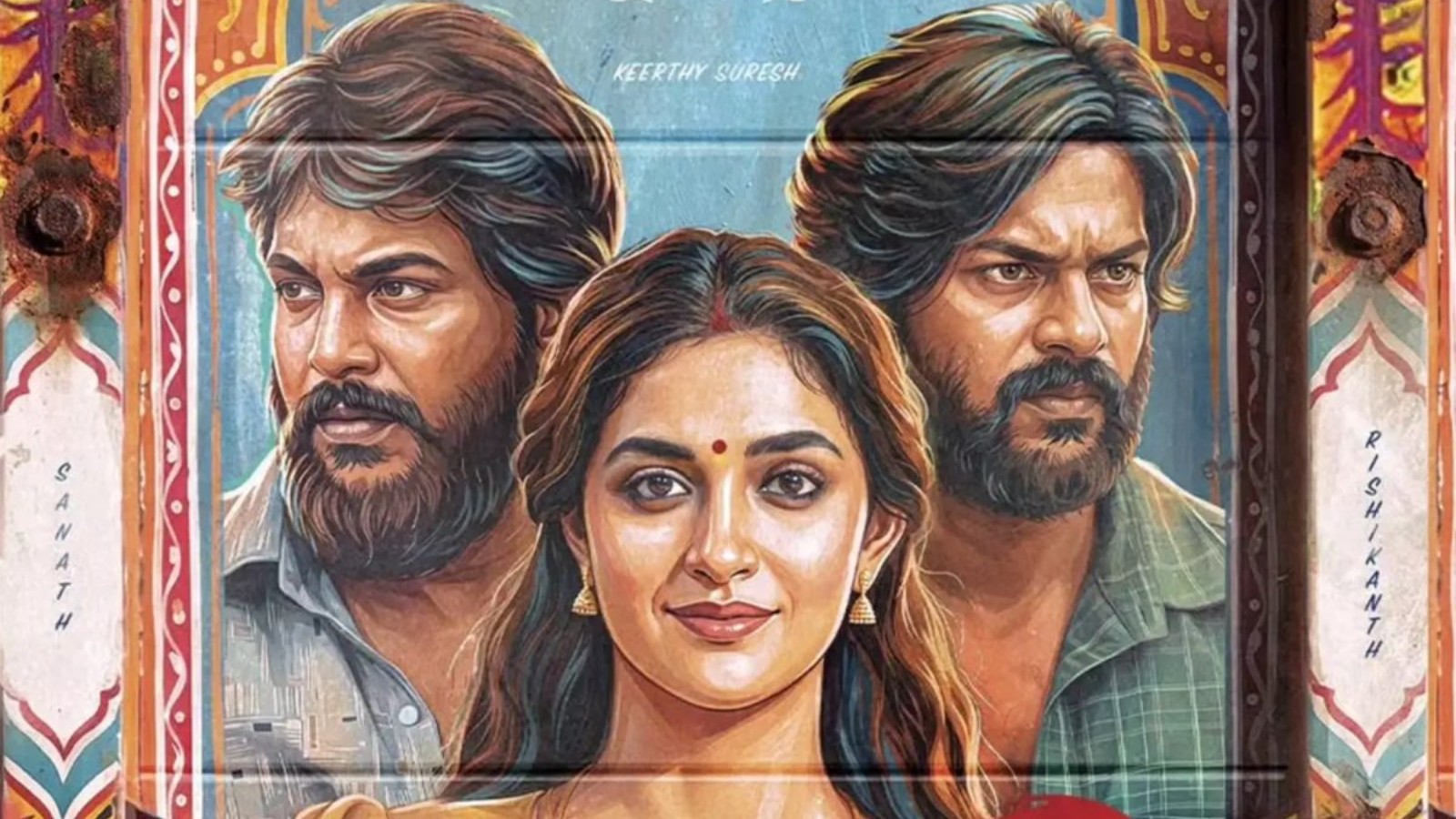
Karthi (Rishikanth) and Subbu (Sananth) are childhood friends. A Bruce Lee fan Subbu is all brash and brawl, thanks to his hyper masculine and misogynistic family of father and two brothers, while Karthi is meek and reserved to express himself. Years later, Karthi and Subbu are no longer what they were, shaped by their growing preferences and realisations of who they are. Thanks to Dorothy (Keerthy Suresh) who comes into their lives at the most unexpected time.
Dorothy movie review:
There is something that speaks loudly when a shot from Karthik Subbaraj’s Dorothy shows a close-up of salna (gravy) flowing through the folds of scrambled parotta. As the liquid seeps through the crevices, one could almost relate its sound to blood rushing through the body. Is that the blood on the hands of misogynistic men who take the lives of women around them? Is it the rush of repressed emotions finally taking charge? Or is it testosterone surging through men when they realise they can love a person regardless of who they are or what they were expected to be? Dorothy is all this and much more. Behind all the rage and repression, and how women, but even men, are controlled by misogynistic men, Dorothy can also be viewed as the love story of a man who finally gets the lip lock of his life after all these years.
(mild spoilers to follow)*
Set in Madurai in 1995, Karthi and Subbu grow up as best buddies. Probably the only household that Dorothy details closely is that of Subbu’s father, Whistle Veeraiya (Muthukumar), a staunch patriarch who proudly doubles up as a casteist, misogynist and unempathetic moneylender. His first two sons are modelled after him, while Subbu, who we are told was born after a long gap following his sister, too begins to exhibit the same traits of masculinity. Until… well, he begins to understand himself and later finds a lending ear in his sister-in-law, Dorothy.
In her limited screen presence, Keerthy Suresh’s Dorothy is an angel, one whose wings are eventually clipped by the men, but that doesn’t stop her from sharing her kindness and empathy with Subbu. Karthik Subbaraj doesn’t resort to visual detailing to show how cruelly this household treats its women. We hear child Subbu telling Karthi that his mother and sister died by suicide. There is vagueness in the way he describes their deaths, but enough to understand what drove them to make the decisions they did. Or perhaps, did they actually make those decisions, especially after seeing what might have happened to the next women who entered their house?
The film shows what toxic masculinity and bigotry against anyone who isn’t a man can do even to a man who doesn’t wish to become the man expected to uphold these beliefs. When Dorothy tells Subbu that while Veeraiya’s family is suppressing the women in his family, Subbu is suppressing the women within himself, a lot gets said. Perhaps it is about more than gender, and about how crying is a trait typically associated with women and subsequently chided by men. There is a running gag in the film where a child Subbu repeatedly reminds Karthi not to cry like a woman, and years later, it is Karthi who keeps discouraging Subbu from shedding tears.
Karthik Subbaraj’s Dorothy isn’t free of pain. In fact, it thrives on pain and toxic masculinity. The good thing is that the film takes a strong position and clearly shows who deserves empathy. For the first 45 minutes or so, the film layers every little character into the world of Dorothy, establishing how each of these threads eventually ties into the ending. There is a dialogue spoken later in the film by one of its redeemed characters: ‘Manasu dhan kadavul, boothi satan’ (heart is God, mind is Satan). It is not one of the women telling you this, but a man who had been soaked in and lived through Veeraiya’s regime until he grew old and found some peace through empathy and consideration. Such nuances make Dorothy a kind and compassionate film that demands a special place in Tamil cinema.
Dorothy works big time because of how much it packs into a limited cast and with little to brandish onscreen. Sananth as Subbu and Rishikanth as Karthi drive the film’s force. While the former gets to dominate the space with his transformation arc, the latter represents a majority of progressive people, the demographic that wants to accept, yet continues to abide by social constructs and the privileges society affords for following them. But alas, who has love left, and when a man melts into a lip lock with the love of his life, Dorothy need not make any more arguments to say that love wins above all.
That all being said, Dorothy still has minor problems. When a transwoman is described as ‘kadavul oda special padaipu’ (God’s special creation), does it automatically mean a line is being drawn between the trans community and what we consider ‘normal’? Though the dialogue comes from the right place and with the right intention, the world’s growing inconsideration tends to slant away from anything we consider special. Another issue is the idea that when a man exhibits supposedly ladylike behaviour, such as crying, does it immediately become associated with femininity? For a film that talks about compassion and acceptance for all, why should an emotional action like crying be associated with women or trans women alone? And above all, even as mystery lingers around Dorothy's character, why would a kind woman like her wantedly settle for a Veeraiya household’s man?
But barring all this, Dorothy stands tall and will continue to do so in Tamil cinema. Sananth and Rishikanth hold the screen, making you want to see Subbu and Karthi simply happy and smiling. If you are able to smile and cry with them, Ilaiyaraaja’s score becomes your guiding angel. The maestro’s songs, with their vintage recall, and the background score he once composed come in handy in Dorothy, which is, at its heart, simply the story of a man who finally gets to lock lips with the woman he loves.
Dorothy Verdict:
Dorothy is earthy, compassionate, audacious, uncomfortable, and, more than anything, mysteriously beautiful. The women in the film may not have kind endings or even a tangible place in the world of Dorothy, but their invisible presence becomes a guardian angel to two people who eventually find love and peace with each other. Dorothy is exceptional, minor flaws notwithstanding.