Obsession, the latest body horror-psychological feature from Curry Barker, dares to rip apart the supposed sweetness associated with infatuation and crushes, turning it into something far more horrific, and, in many ways, brutally honest. As each grotesque image, unsettling reveal and thematic layer unfolds, the film does something unexpected: it builds empathy around the very character unleashing the horror onscreen.
What could be worse than wishing your crush would like you back, not just like you, but love you more than anyone else in the world? It sounds like the premise of a romance. But Barker has other plans. What follows instead is a horror story that quietly spells out what it means to be a woman trapped inside the desires of a man who appears, at first glance, to be nothing more than an innocent boy in love.
Bear (Michael Johnston) is in love with his co-worker Nikki (Inde Navarrette). Beyond working together at a musical store, there is little to suggest intimacy between them. In fact, the film repeatedly questions whether what Bear feels is love at all. He seems to know almost nothing about Nikki, not even details as basic as her strained relationship with her father. Still, Barker allows enough ambiguity for us to believe that perhaps Bear’s feelings developed during their time together.
Everything changes when Bear comes across One Wish Willow, a novelty store item capable of granting one wish when snapped in two. Predictably, Bear wishes that Nikki would love him more than anything else in the world. Within moments, Nikki transforms. She becomes consumed by him, moves into his home and gradually overtakes every aspect of his life. What follows is a suffocating spiral of obsession, dangerous love-bombing and emotional imprisonment.
What makes Obsession unexpectedly empathetic is the way Barker frames Bear as painfully ordinary, only to slowly reveal the ugliness underneath his longing. Before the wish and even sometimes after, Bear never behaves aggressively toward Nikki. He never openly disrespects her or crosses obvious boundaries, especially compared with what post-wish Nikki, or “freaky Nikki,” becomes. But that is precisely what makes the film unsettling.
For a man unable to confess his feelings directly to instead search for a backdoor solution, one that strips away a woman’s agency and free will, becomes the film’s true horror. Frame by frame, Obsession visualises Nikki’s fixation as supernatural possession, but its thematic weight lies elsewhere: in exposing that Bear’s desire is ultimately more dangerous because it feels recognisably human. The belief that someone is entitled to another person’s affection, attention or choices is a horror the real world understands all too well.
Like many great horror films that tempt audiences into shouting instructions at characters from the safety of their seats, Obsession teases easy answers before complicating them. Why does Bear keep returning home to freaky Nikki? Yes, she tapes the doors shut. Yes, she watches him sleep and even feeds him his dead cat disguised in a sandwich. And yet Bear repeatedly gets opportunities to leave, to walk away and reclaim distance from the consequences of his own wish. But he comes back.
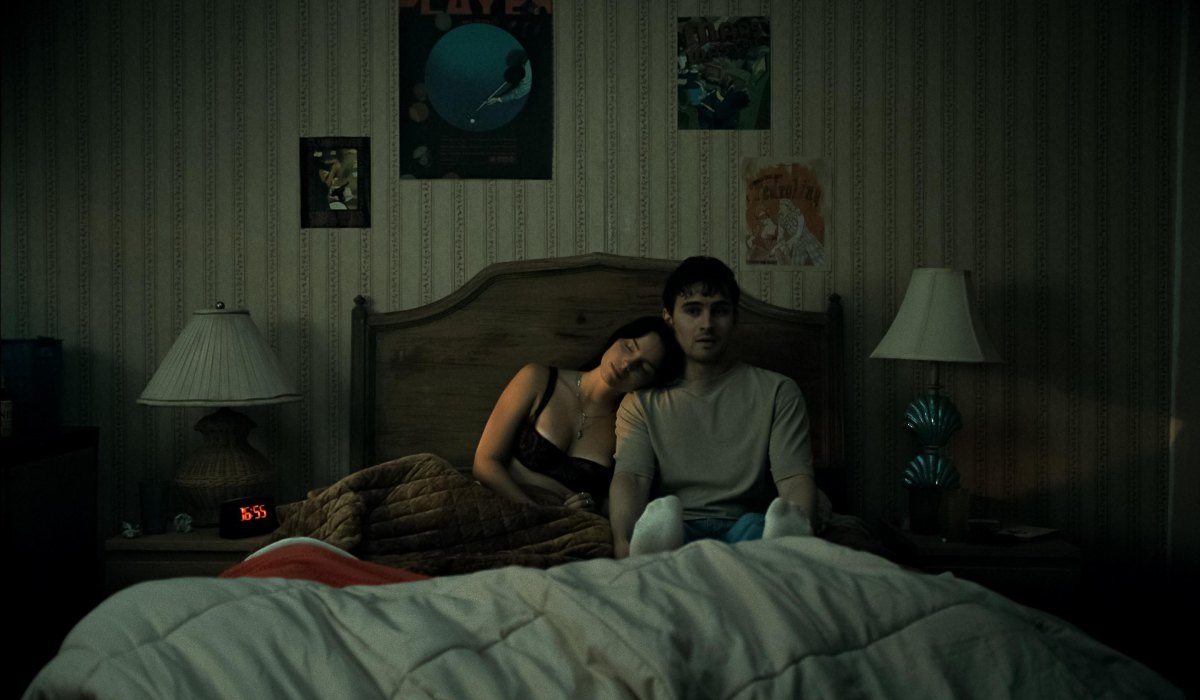 A still from the hit horror film, Obsession
That decision becomes one of the film’s most revealing acts. Bear wants Nikki beside him, but only on terms he can control. Once her devotion exceeds his comfort, his desire turns into resentment. In those moments, Bear becomes less a victim of obsession that he manufactured out of his own and more an embodiment of a masculinity that demands possession without responsibility. There are flashes where the film almost resembles romance, enough to suggest Bear still sees affection beneath Nikki’s transformation.
But Obsession never lets us forget what has actually been stolen: Nikki’s right to decide whether she wanted him at all. After all, when would Bear realise that he isn’t the victim of his wish, but the woman who even is soiling herself while waiting for him to return from work.
What Barker also smartly avoids is turning Nikki into the villain despite giving her the most visually horrifying moments. Lesser films would have reduced her transformation into a cautionary tale about women being too emotional or too attached. Instead, Obsession keeps reminding us that every disturbing act committed by freaky Nikki originates from a desire that was never hers to begin with. Her obsession is manufactured; Bear’s is chosen.
Which is why perhaps the ending of Obsession leaves you with some catharsis. There is a moment of mutual love that Nikki and Bear share and for some reason, it feels the warmest part of the film, almost like listening to the sweetest music when the house comes down burning. The idea of embrace and peck on the lips when you know the other person also feels the same way. Obsession quietly asks whether there is anything more disturbing than wanting reciprocation without consent.
Obsession joins a growing list of horror films like Barbarian and Sinners that use genre not merely for shock or spectacle but to interrogate broader social anxieties. Barker, emerging from the YouTube and digital-native space, delivers a film so close to the realities of contemporary relationships that its most frightening idea isn’t the body horror on screen, it’s how familiar the emotional logic behind it feels.