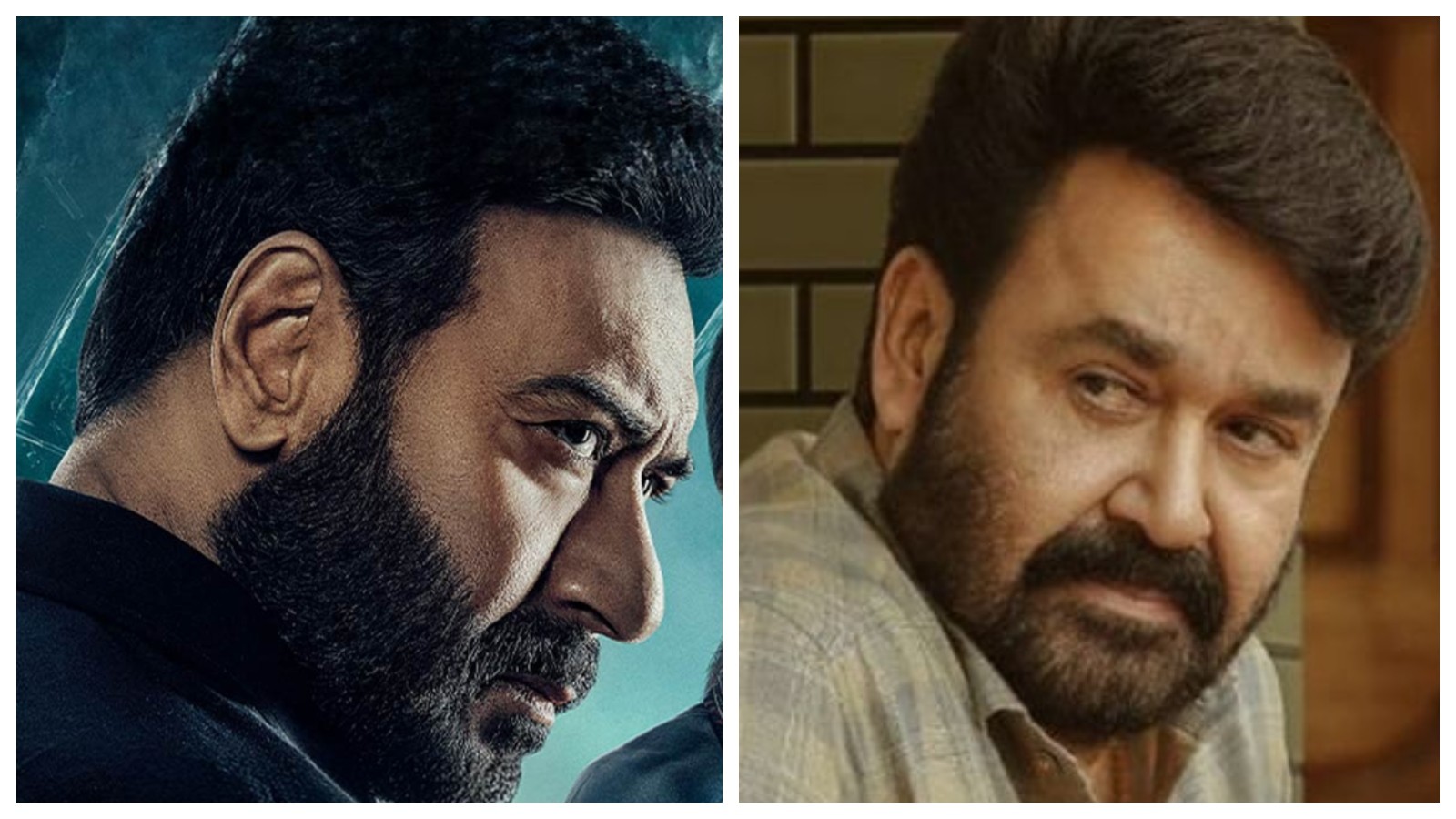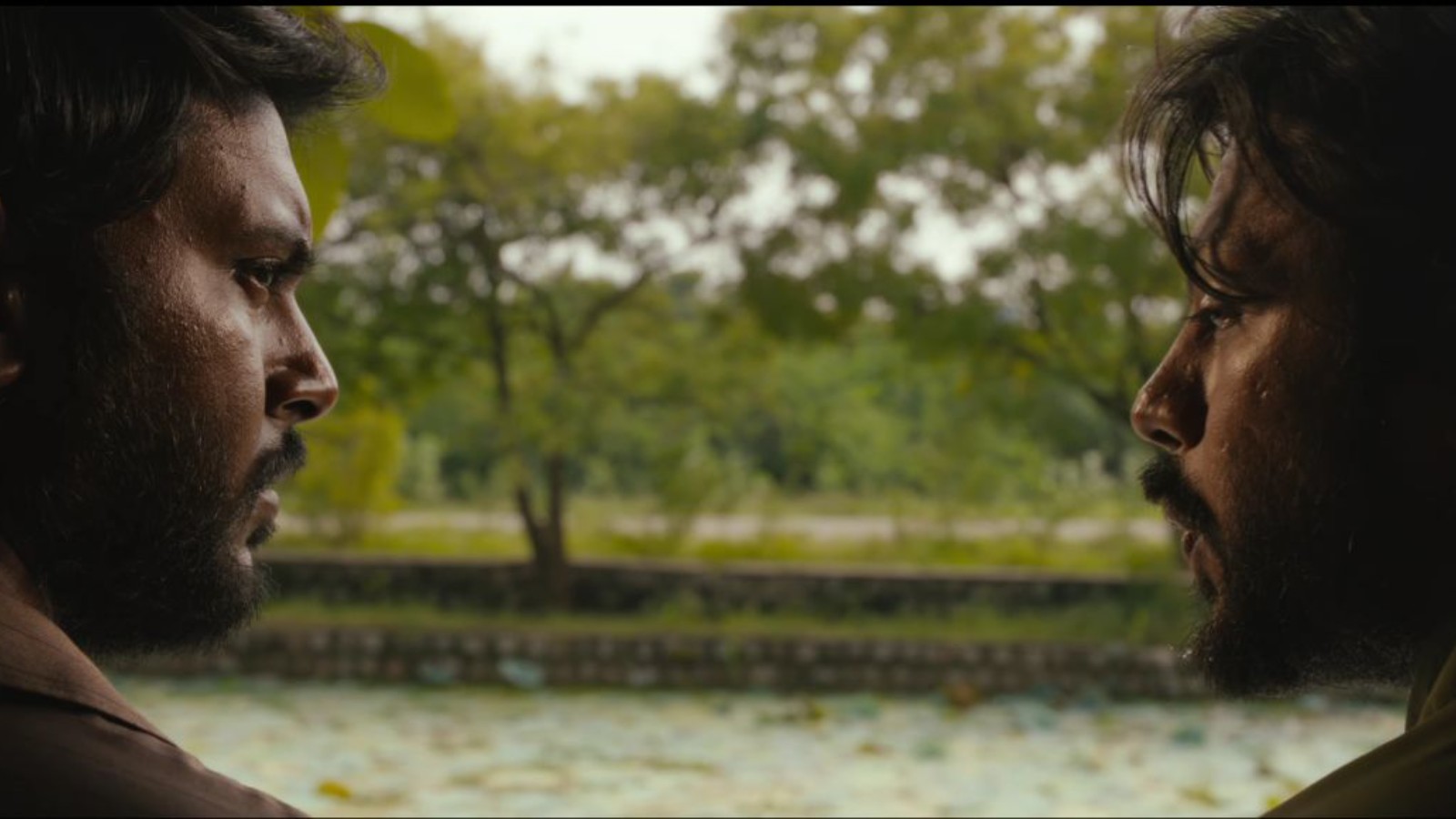
In Toxic: A Fairy Tale for Grown-ups, the commonplace sight of Yash clamping a cigarette and walking about in crisply fitting suits doesn’t do many favours to the film’s long-standing comparisons with the two K.G.F movies. That the 40-year-old actor has chosen to play yet another unruly, trigger-happy gangster is hardly surprising given how the environment for Indian male superstars today is voluntarily restricted to such roles. The surprise element rather lies in the fact that the two characters - Raya and Rocky Bhai, namely - are indistinguishable to the point that they could replace one another and manage to create a farcical situation as twins.
Even the backstories of Raya and Rocky have the same motherly echoes, albeit with entirely contrasting shades. While the latter inherits his zest and hunger for power/wealth from his dying mother, the former carries forward distrust and horrors through his sex-worker mother (played by Sanjeeda Sheikh), with his older sister Ganga (Nayanthara) by his side to share it all with him. As fate would have it, Ganga assumes the maternal role in his life and soon enough, we are somehow back on the KGF track where the woman becomes the enabler and the man, the conqueror.
In theory, at least, one gets the idea of what Geetu Mohandas and her co-writer Yash are chasing. Toxic perhaps is an antithesis to the blinding machismo that films such as KGF have propagated in recent years, and it is rather interesting to note that Yash takes it upon himself to overturn that sensibility. Raya and Rocky Bhai might have sprung from the same trenches of society, but one cannot just conquer the antagonist without putting their life on the line. While the human form of Adheera in the K.G.F: Chapter 2 allowed Rocky to absolve himself of his questionable choices and walk away feeling fine about himself, Geetu Mohandas suggests that peace eludes man until he defeats his own guilty conscience.
 Yash in Toxic
And - again - in theory, this subtle difference is what separates Toxic from the other iter magnum stories we have been watching of late. The new film proposes a rather Macbethian idea where guilt manifests almost physically before an undisputed king whose mind runs riot and turns him into a liability to himself. As Shakespeare would have it, violence then becomes a tool to silence the paranoia coursing through his veins, granting him one final chance to confront his demons. Having nearly lost his virility, too, by the end, violence is also the only lust Raya can afford now, says Mohandas.
But virile men need a representation that doesn’t mistake fascination for admiration. It wouldn’t be unfair to claim that Toxic is a bizarre collision of two viewpoints, except that they don’t ever converge to ultimately reveal something greater. On the one hand stands the incredibly valid study of Raya’s fallability, while on the other struts an over-the-top filmmaking grammar that doesn’t ever allow us, the viewer, to understand why this man, this infuriating movie archetype, needs to fall in the first place. If we cannot confirm what Raya’s ambitions (lusts) are and where they essentially originate, we cannot be expected to grasp his self-destructive streak either.
One of the more important questions is why Raya wishes to conquer Goa in the first place. The backstory offers a sparse idea as to his psyche and why Ganga is an irreplaceable element of his life, but at no point does the film bother itself with the practicalities of the physical terrain it belongs to. Geetu Mohandas’ previous two films as a director are noteworthy for the authenticity they are imbued with, and it is thereby perplexing to see the Goan milieu etched out so thinly in her latest outing. The politics of that setting, which straddle both an entrenched Portuguese culture and an upcoming Indian identity, are completely absent from the life visible on screen, and in turn, the film ends up painting a portrait that’s enigmatic and rich, no doubt, but still almost entirely devoid of insights that you want from a story such as this. You want to know where these opium dealers and snazzy gangsters come from, what they eat, how the laypeople engage with them, and the kind of presence they have in the larger scheme of things; the cultural exchange that is rampant in the time period; the drifters that Ganga and Raya are; and the guile with which they rise to prominence, allowing us not just to view the story in broadstrokes but internalise it to a great effect.
Also read: Toxic: Yash and Geetu Mohandas’ ambitious experiment struggles to find Its balance
A film that comes to mind as a credible reference at this point is Guillermo Del Toro’s Nightmare Alley (2021). There, the journey of a street-smart social chameleon, named Stan Carlisle (Bradley Cooper), who dupes people under the garb of being a mentalist and meets a befitting collapse, gets all the more enunciated when we get to know each participant of the game from up close. Stan’s dubious past leads him to a travelling carnival where he meets strongmen, bearded ladies, dwarfs, clairvoyants, and even a geek who is popular for biting the heads off live chickens. Each person has a defined personality that initially overwhelms Stan, until he nudges them aside through his trademark manipulation, only to eventually burn away the high stakes he creates for himself and fall further than where he started.
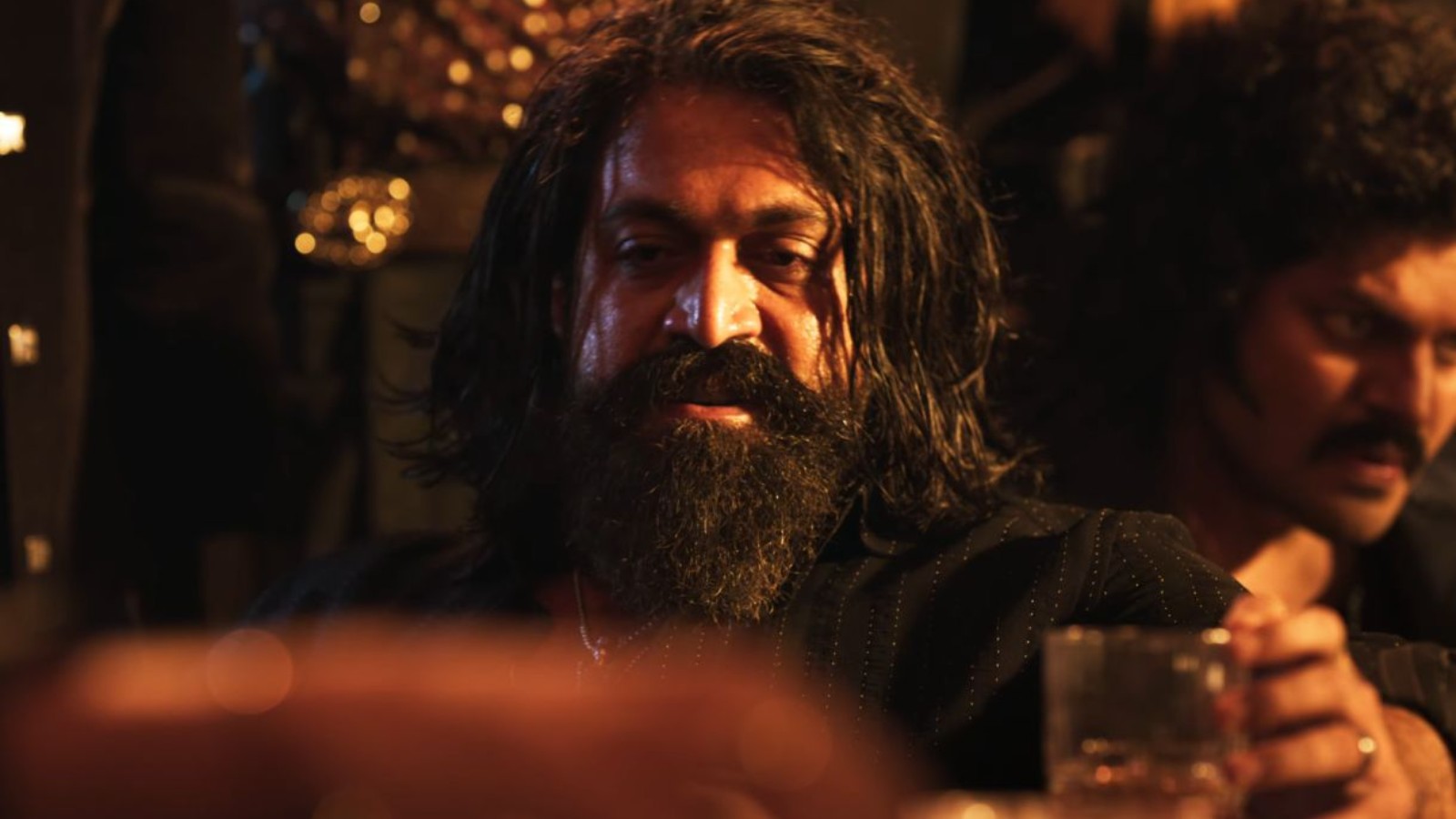 Yash as Raya in Toxic
In contrast, Toxic barely lets us into its heart, and instead prefers to create a facade that has no space for mundanities. Raya’s powers are extolled and exaggerated to appease the real-life superstar’s fans, and while those obligations could perhaps never fully go away in the Indian context, the film still finds no space for a formidable foil either. It doesn’t tell us who Ganga really is or how she fits in this world, who Elizabeth is and why she chooses to be so…one-dimensional. It doesn’t let Nadia and her grace linger long enough to haunt Raya as well as us.
I want to dearly entertain the thought that this portion of Toxic, which makes up about 75% of the narrative, is a long, deliberate decoy on Mohandas’ part. That Geetu Mohandas knowingly wants to use the syntax of a K.G.F to challenge its very ethos.
There are enough suggestions, if not evidence, too, to support this claim. The guilt word is uttered with utmost clarity by Raya himself and he follows it up with a plea to Mukti (salvation) shortly after. The scene in itself is alluring for the simple reason that Yash pushes himself as an actor to new depths, committing to a tenor and never second-guessing. Perhaps it is at this point that the film, too, assumes a new identity almost out of nowhere, and the much-suspected collision of two sensibilities becomes quite apparent in the moment.
Also read: Violence, Violence, Violence: The trouble with the new Indian male superstar
But it all comes a bit too late, especially when you know that Toxic wants to end its discourse right there, abruptly, with a mere admission of guilt, letting its subject get away with consequences that just feel like a slap on the wrist. Some might say that it took us this long to reach even this juncture, but given the film’s turbulent nature that lasts unflinchingly for nearly 200 minutes, the payoff ought to have been worth the billing. Toxic dares to venture into a territory that very few have, but its probe into the mythology of the modern-day hero also carries a celebratory tone. And one presumes that was never Mohandas’ original intention.