Warrant series plot:
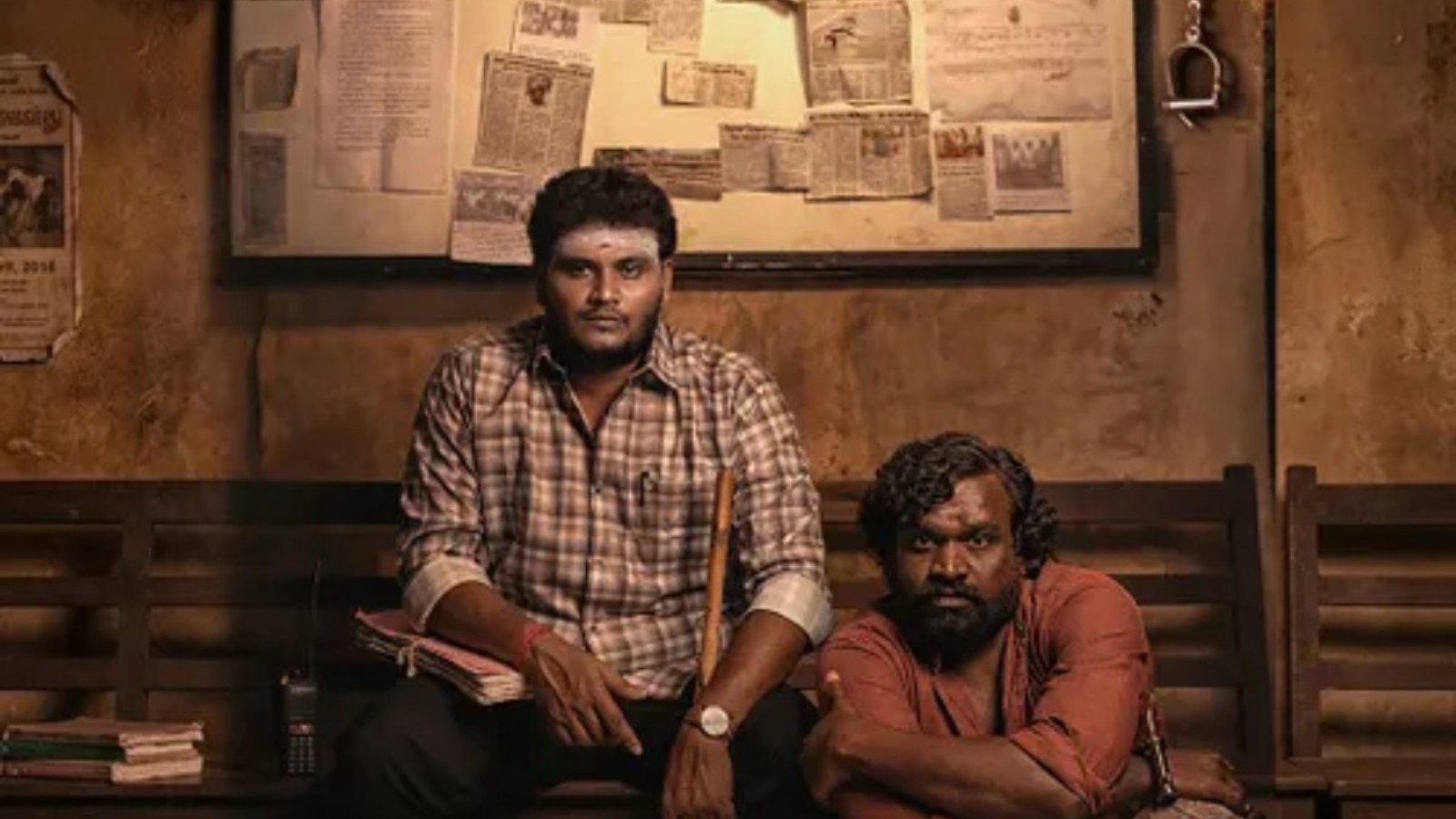
After relentless pressure from his father to secure a government job, Kottai Karuppusamy (Prashanth Pandiraj) joins the Golden Fort police station in Trichy as a rookie cop. Clueless about the workings of the force and struggling to command authority, Kottai quickly becomes the laughing stock of the station after a criminal escapes from his custody. Humiliated by colleagues and burdened by an insulting nickname, he gradually attempts to reclaim his dignity and prove his worth within the system. What follows is less a heroic rise and more a layered transformation of an ordinary man learning the realities of policing.
Warrant series review:
In director Prashanth Pandiraj’s Vilangu, also set in Trichy, the police station itself functioned like a living, breathing character, offering an intimate glimpse into the emotional and moral exhaustion that comes with wearing the khaki uniform. Warrant, positioned within the same universe, revisits that texture and atmosphere with a more character-driven lens. While Vilangu centered on Paruthi, fragile, intelligent, conflicted and constantly cornered by circumstance, Warrant turns its attention toward a protagonist who evolves not through cinematic heroism, but through bruises, humiliation and incremental change.
Prashanth Pandiraj, who also stars as Kottai, plays the character with an understated vulnerability that keeps the series rooted. The writing consciously avoids giving him a dramatic, larger-than-life arc. Instead, Warrant unfolds episodically, allowing each case and interaction to shape Kottai’s understanding of the profession. Unlike conventional police dramas that revolve entirely around investigations, here the cases merely become windows into the everyday ecosystem of a station and the people occupying it.
That choice becomes the show’s strongest aspect. Police officers in mainstream cinema are often mythologised into invincible figures, symbols of masculinity and authority stripped of emotional texture. Warrant pushes against that image. Its characters are insecure, frustrated, morally conflicted and occasionally incompetent. Their vulnerabilities are visible, sometimes embarrassingly so. Kottai himself becomes the embodiment of that idea. Early in the series, he earns ridicule after a criminal escapes by kicking him in the groin, leading his colleagues to twist his name into a running joke. The gradual shift from mockery to respect forms the emotional spine of the narrative, and for the most part, the series handles it with sincerity.
Yet Warrant is not without its complications. The series repeatedly brushes against the issue of custodial violence, and not always with the nuance the subject demands. As Kottai slowly gains credibility within the force for cracking difficult cases and tracking elusive criminals, he also becomes associated with violent interrogation methods inside the station. This thread eventually escalates into a tragic incident that drives the latter portions of the series. While the show attempts to examine the consequences of such brutality, the writing occasionally treats it more as an occupational inevitability than a systemic failure. In a time when real-world custodial deaths continue to dominate headlines, the treatment feels uneasy and underexplored.
Still, Warrant remains compelling because of its observational detail. The series is less interested in following a rigid procedural structure and more invested in examining the culture of policing itself. Even supporting characters are written with continuity and purpose rather than existing as temporary additions to individual episodes. The corridors and walls of the Golden Fort police station once again carry emotional weight, echoing the lived-in realism that made Vilangu distinctive.
Warrant series review:
Warrant ultimately succeeds as a detailed and well-performed police drama that places its story above the protagonist. While the direct connective tissue to Vilangu still remains largely unexplored, the emotional and tonal imprint of that series lingers strongly here.