I watched Batwara 1947 with a profound sense of nostalgia. Not for the plot, the actors, the music, or the era in which it is set, but for the way it is filmed. It is thoroughly domestic, unabashedly old-school, and comes from a near-extinct breed of directors with an innate ability to weave an emotionally affecting narrative out of a mere thought. The message is built-in, spoon-fed to good effect, but you do not really mind.
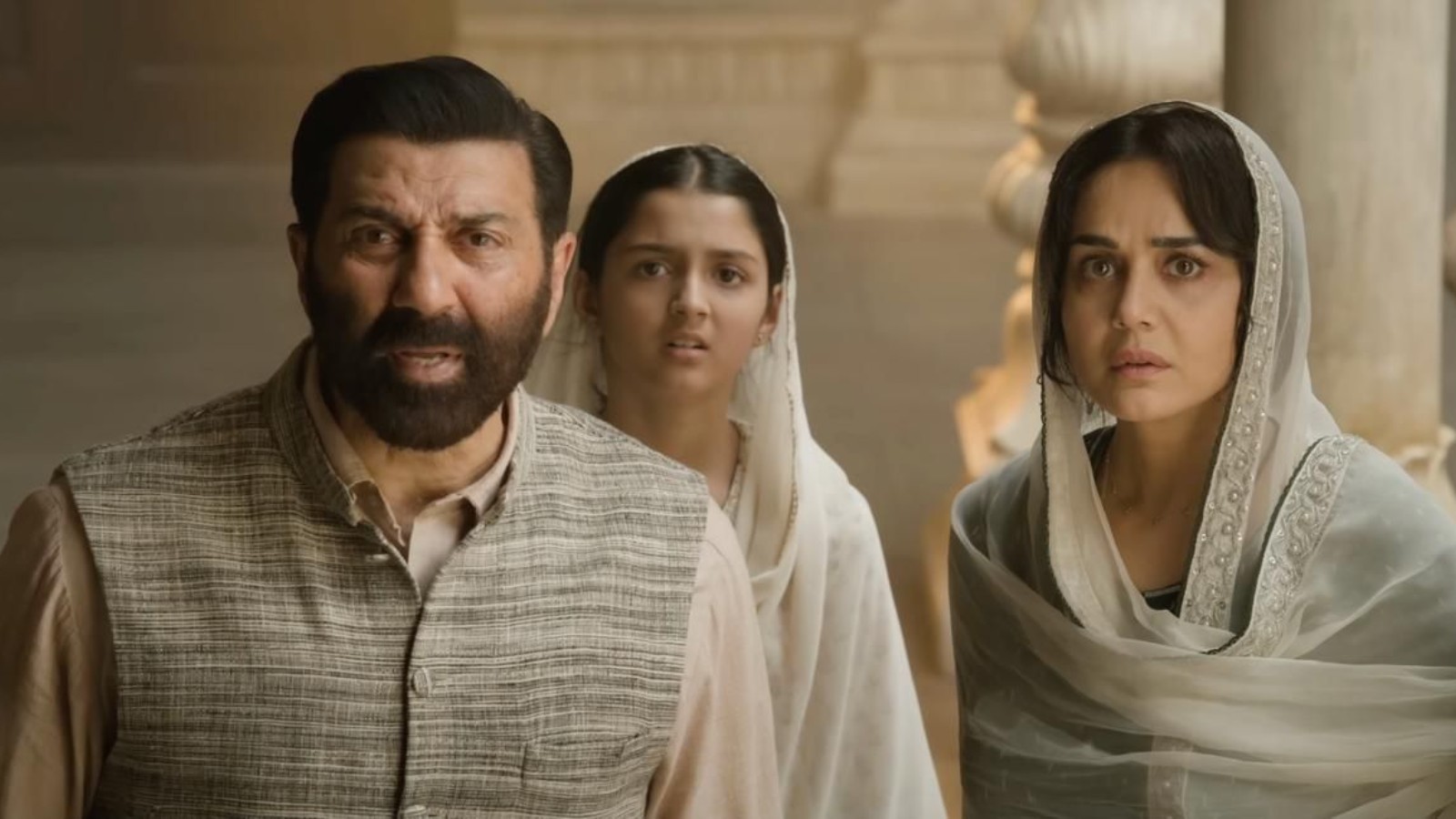
The Rajkumar Santoshi directorial is based on Asghar Wajahat’s play Jis Lahore Nai Vekhya, O Jamya E Nai (the playwright has co-written the film with the director). The story revolves around an Indian Muslim, Sikander Mirza, and his family, who have lost everything back home (nearly their son too) and must rebuild their lives in Lahore, residing in a house that once belonged to a Hindu jeweller.
The matriarch of the house, Durgavati, refuses to vacate the premises until she reunites with her family, who remain stuck in India. Following an initial phase of friction, a classic tale centring on communal harmony in a nascent, volatile nation unfolds. There are exceptionally warm people who would do anything in the name of humanity, alongside a manipulative faction eager to exploit religious tensions for power.
Right under the same roof, the belief systems of the father and son clash. A physical chain separates Durgavati’s room from the Mirza family, which is literally broken as they mend their differences. Hamida (Mirza’s wife) begins her day by cooking for Durgavati in a separate vessel. When miscreants attempt to attack Durgavati one night, Mirza fights them off and lights a diya before her Krishna idol.
In happier moments, they illuminate the entire house for Diwali. There is a bhajan, Kahaan Chale Gaye Ho Ram (sung by Anuradha Paudwal and Shaan), where the mother’s agonising wait to reunite with her son comes to the fore. In one tense sequence where goons mistreat Durgavati and her chunni is caught flying mid-air, Mirza arrives in a chariot like a modern-day Krishna guarding the dignity of a Draupadi.
Later, during a funeral sequence, a Muslim man steps in as a son to a Hindu woman, performing her final rites to the chants of ‘Ram naam satya hai...’ A. R. Rahman underlines the pathos with ‘Maa Kahaan Jaa Rahi Hai’, reminiscent of ‘Luka Chuppi’, as a son laments the loss of his mother.
A maulvi repeatedly suggests that the essence of Islam lies in brotherhood and that the Almighty never favours the oppressor. The film intentionally maintains a delicate balancing act between both religions, illustrating that virtue and malice exist on both sides.
A Hindu railway station manager betrays the trust of Muslims in India, leaving them prey to rioters. Across the border, a group of Muslim men torment a Muslim woman to death. While a contemporary filmmaker might have left the subtext to the viewer’s interpretation, Santoshi spells out ‘humanity above all’ at every turn, embracing an unvarnished, melodramatic style of storytelling that has all but vanished today.
Shabana Azmi complements Santoshi’s approach seamlessly, never letting the performance veer into pretension. Amid the heavy drama, she brings a gentle innocence to Durgavati as the matriarch slowly reconciles with the changing social fabric of a new country. ‘Everything feels the same... a few people feel familiar... some don’t,’ she remarks after catching a glimpse of the local market post-Partition.
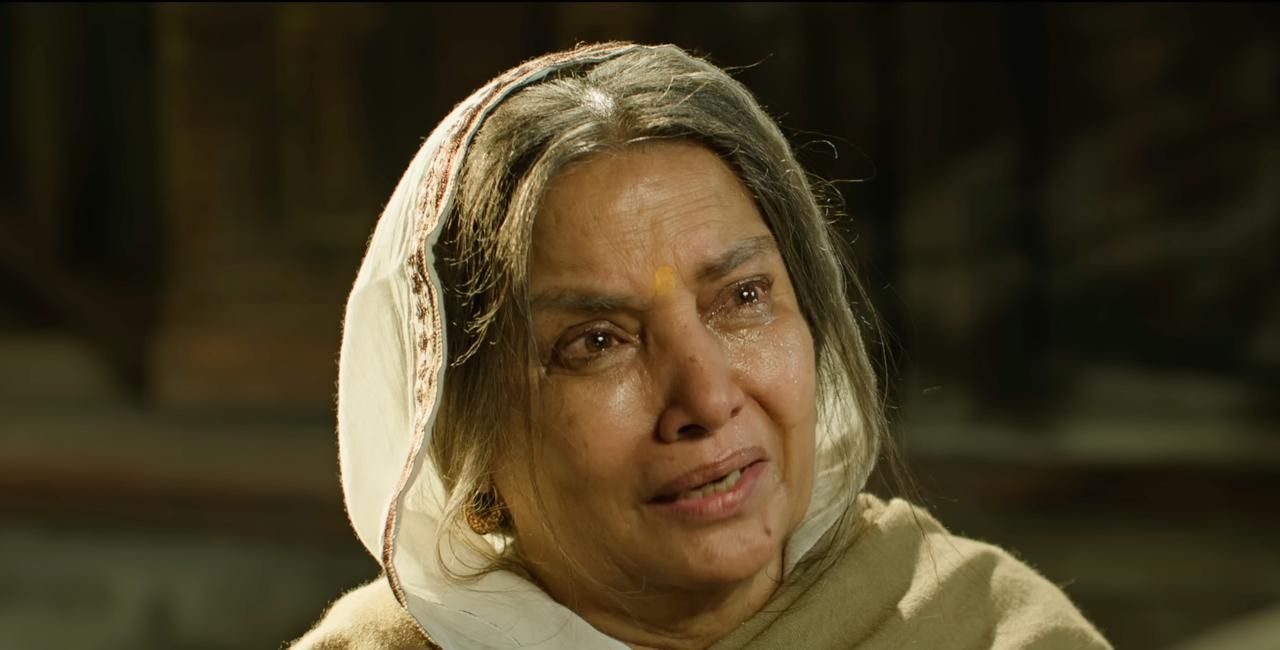 Shabana Azmi in Batwara 1947
It is striking how the ‘stand and deliver’ brand of heroism remains a natural extension of Sunny Deol’s persona at 68, occasionally even feeling convincing. He has rarely looked fitter. His performance, while steeped in the conventions of the past, does not feel entirely dated. Santoshi ensures there are enough whistle-worthy moments for his audience.
The narrative is crafted squarely for the masses: the protagonist proves himself to be a responsible father, a sensitive husband, a doting son, and a fierce protector when duty calls. The women, meanwhile (knitting sweaters, shopping in the market, dancing with joy, managing domestic affairs, or sheltering beneath cots during attacks), remain reliant on the men throughout.
Though confined to the narrow lanes of Lahore, the familiar sets recreating 1940s Pakistan, and the haveli where most of the film takes place, Santosh Sivan’s imagery and expressive lighting, particularly in the night sequences, keep visual monotony at bay.
In a recent review of Hai Jawaani Toh Ishq Hona Hai, film critic Bhawana Somaaya observed that the David Dhawan film might be a viewer’s last chance to experience a 1990s-style, unpretentious comedy in theatres. She remarked: ‘While we were all critical of Manmohan Desai’s films at the time of their release, we ended up missing him the most when he stopped making films.’
For those with an enduring affection for vintage Hindi cinema, the fear is real that this brand of full-throated filmmaking, executed with total conviction and an auteur’s distinct sensibility, is growing rarer by the day. Batwara 1947 is by no means Rajkumar Santoshi’s finest work, but it stands as a heartfelt throwback to the artistic sensibilities that once defined mainstream Indian cinema.