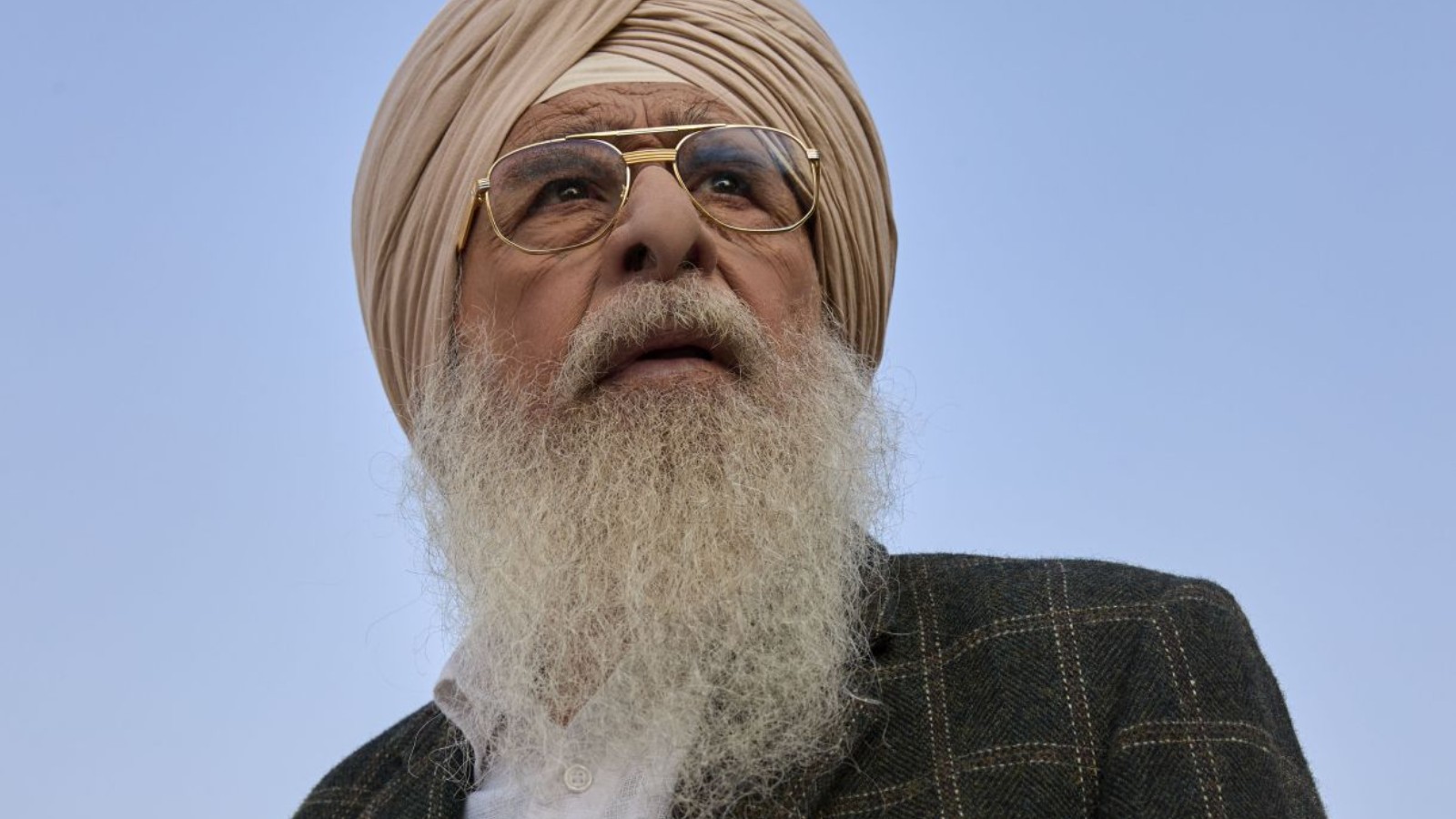
A 95-year-old Sikh businessman, Ishar Singh Grewal, dressed as crisply as ever, summons his driver, asks him to start the car and hands him an address. Unaware of the directions to this place, the driver is puzzled. Grewal tells him to drive till Lahore and says he will guide him from there. Bewildered, the driver tries to explain that Lahore is on the other side of the border and that it is impossible to get there.
Grewal, originally from Sargodha in West Punjab, has seemingly forgotten that Partition ever happened. He is equally shocked when he sees the Attari gate and asks why there are so many policemen. Has there been a robbery?
This opening scene from Main Vaapas Aaunga satirically captures the absurdity of Partition. For 78 years, the border has defined the growing distance and tensions between the two countries. Yet it means nothing to a man whose memories of home belong to a time before the border existed.
Soon on his deathbed but refusing to give up, all Grewal wants is to return to his home in Sargodha, meet the love of his life and fulfil a promise he had made to her but could not keep. Through bizarre, cryptic phrases like ‘Martians invading the Moon’, Grewal tries to communicate his pain and grief to his grandson Nirvair (Diljit Dosanjh). As Nirvair tries to understand him, the film takes us on a heart-wrenching journey through fragments of Grewal’s mystic, dreamy memory.
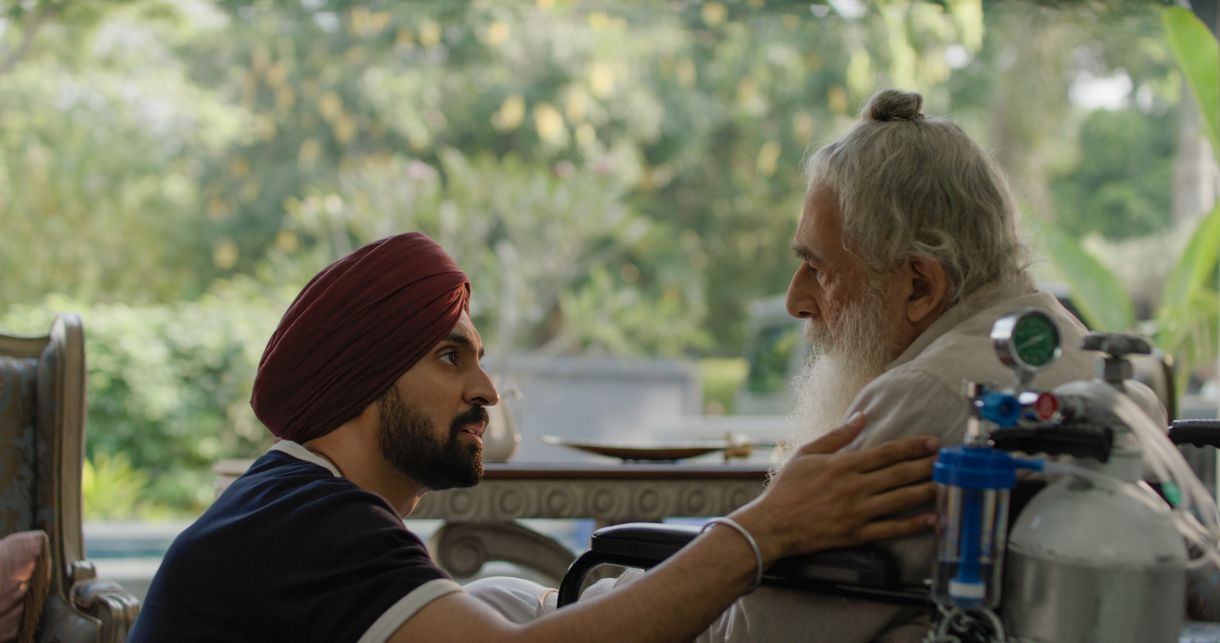 Diljit Dosanjh and Naseeruddin Shah in Main Vaapas Aaunga
Naseeruddin Shah, who plays Grewal, brilliantly portrays the fading mind of a stubborn old man trapped between the haunting details of Partition and the memory of the love of his life, Jiya. Diljit is composed and compelling as Nirvair, who is stuck between dreams of becoming a stand-up comedian and the grind of his corporate job, before finding purpose in helping his grandfather.
Just as Partition is announced, Jiya and Keenu, who have only just expressed their love for each other, sit in the ancient ruins, worrying about what will happen to them if the Sikhs are forced to migrate. In the immediate next scene, we see Nirvair speaking to his girlfriend Kaveri, who tells him she is going to a fertility clinic with a friend to enquire about freezing her eggs. Imtiaz juxtaposes these two conversations about love, separation and the future across generations, while also making a subtle comment on the commodification of reproduction and the multi-billion-dollar fertility industry. It is a striking moment in a film that continues Imtiaz's critique of a deeply capitalist world.
A R Rahman's music, especially ‘Tere Paas Main’, is soothing, almost like a balm for the victims of Partition and the pain the film leaves behind.
Why is history so important? When does a film detailing the events of the past become important? And why should the past be recalled? Main Vaapas Aaunga is not just a Partition tale but a message against hate. Through Grewal’s story, it shows that the horrors of displacement and violence do not end with the events themselves; their pain continues to be felt decades later. The film screams — no other child should have to feel the same pain years later. The final credit song, ‘Kya Kamaal Hai’, captures this sentiment, extending the film’s message beyond Partition to the violence and suffering that continue to scar the world.
In heavily polarising times, Imtiaz looks at Pakistan as an emotion, a fragment that was once ours. During the recent student protests, a reel on Instagram by a Pakistani influencer supporting the students went viral. In the video, he noted that the youth on both sides share the same struggles and pain, and stated, ‘You are me, I am you. We are children of divorce’.
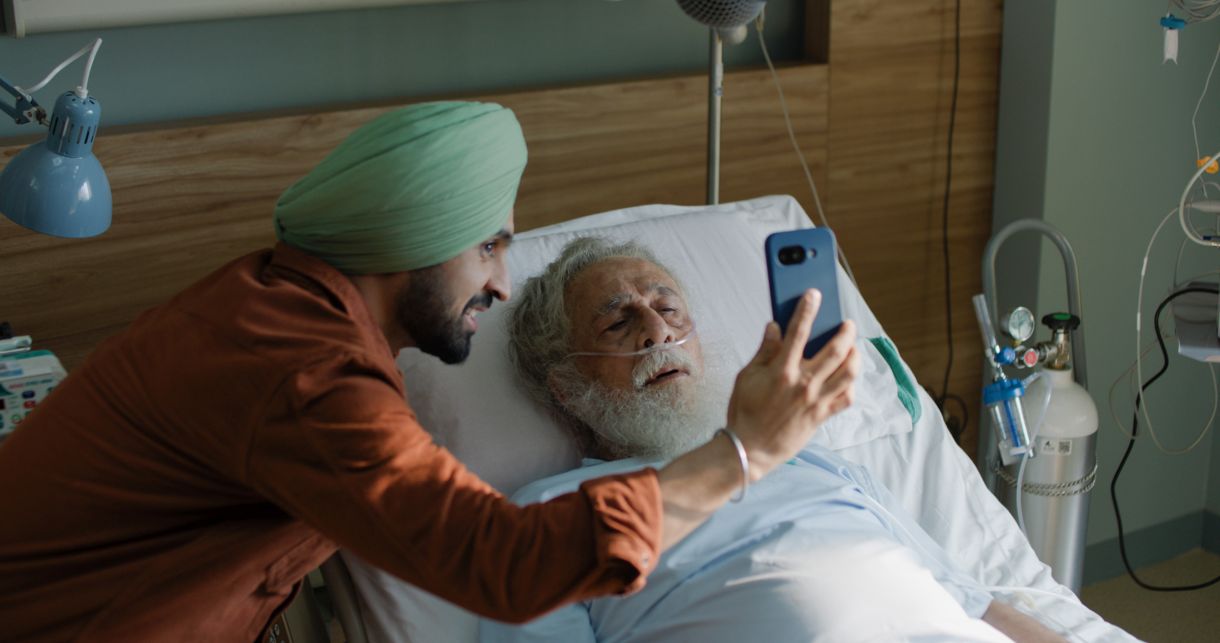 Diljit Dosanjh and Naseeruddin Shah in Main Vaapas Aaunga
‘We are children of divorce’ – profoundly describes the inheritance of Partition. Two countries separated by a political rupture, with generations growing up carrying the emotional and cultural consequences of a separation they had no part in creating. Over the years, people on both sides have been taught to see each other as opposites, but the shared histories, languages, music, memories and anxieties keep revealing how much we have in common.
In that sense, Main Vaapas Aaunga is, at its essence, about the longing to return — to a place, a person, a memory, a culture and a sense of belonging that was lost. Across his filmography, Imtiaz Ali has repeatedly used memory and longing as ways of finding oneself and finding one’s way back home. This time, through Grewal’s longing, it is Nirvair who truly finds his way back home. Perhaps that is what makes the film’s idea of home so poignant: returning is not always about going back to where you came from, but finding your way back to what you have lost.
(Main Vaapas Aaunga is currently streaming on Netflix)