Batwara 1947 story
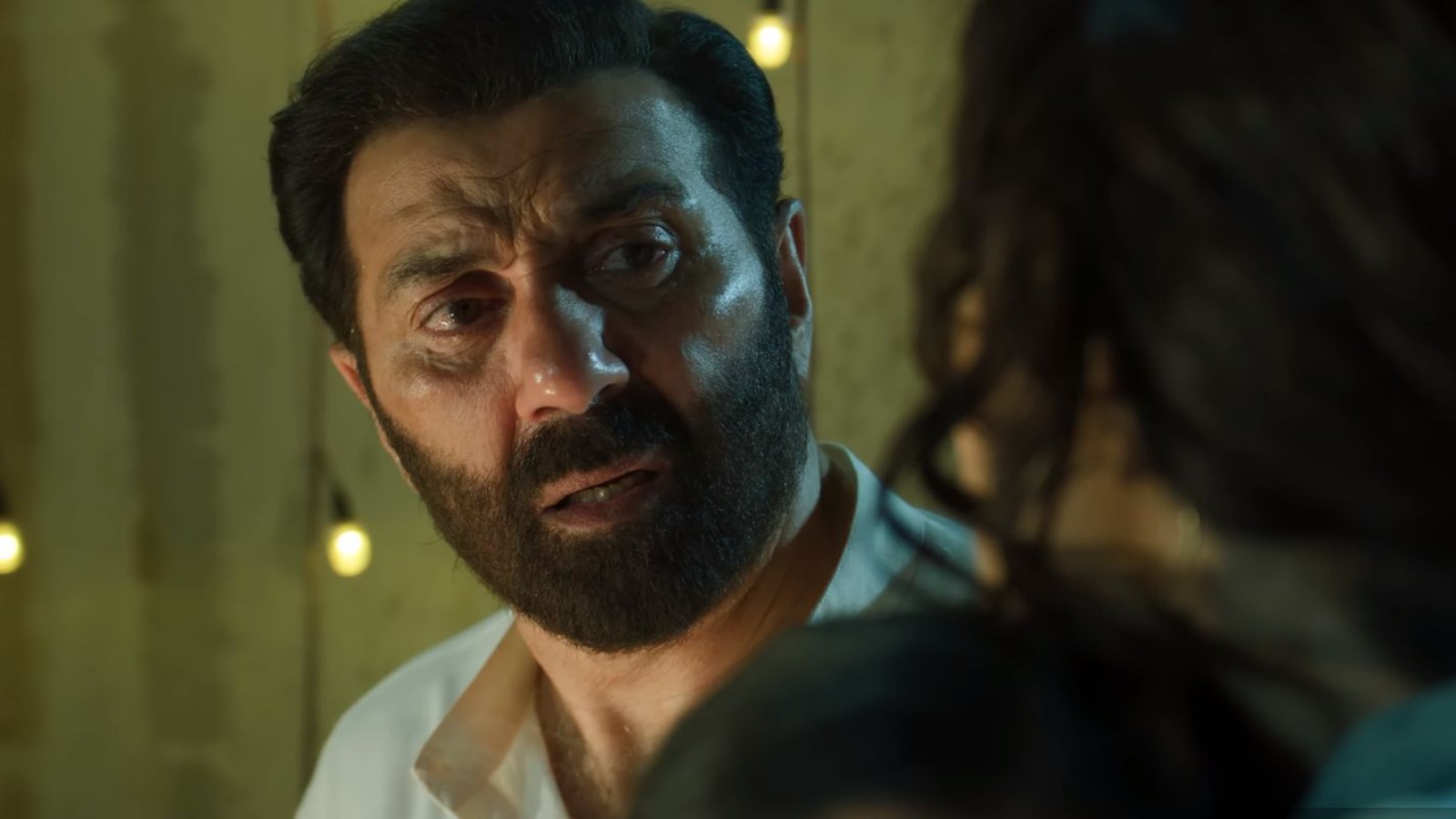
Sunny Deol plays Sikandar Mirza, a man who is forced to leave Meerut with his family during Partition and eventually reaches Lahore. Sikandar overstays at a government refugee camp and is eventually allotted a large haveli. His wife Hamida (Preity Zinta), son Javed (Karan Deol) and daughter Tanno (Khushi Hajare) join him there. However, there is an unexpected problem. An elderly Hindu woman, Durga, fondly called Mai (Shabana Azmi), has been living in the haveli without anyone’s knowledge.
The story initially takes the shape of a property dispute, as Sikandar wants Mai to vacate the house. But she refuses to leave because she is waiting for her missing son. As the story progresses, several emotional moments bring Mai closer to the Mirza family, and she eventually becomes an integral part of their lives.
The situation becomes increasingly difficult when Sikandar realises that protecting Mai is not merely a matter of giving her shelter. In the newly created Pakistan, communal tensions are running high, and there are people who are determined to drive her out. Sikandar then takes it upon himself to protect the elderly Hindu woman and ensure her safety. Can Sikandar save Mai and help his family lead a peaceful life amid the communal violence surrounding them? That forms the crux of "Batwara 1947".
Batwara 1947 Review
The core message of "Batwara 1947" is that religion should never determine whether someone deserves compassion, empathy or humanity. The film effectively conveys this through the bond that develops between Mai and the Mirza family, highlighting the possibility of Hindu-Muslim brotherhood even during one of the darkest periods in the subcontinent’s history.
Based on Asghar Wajahat’s acclaimed 1989 play "Jis Lahore Nai Dekhya, O Jamyai Nai", the film has several emotionally effective moments. However, the execution does not always match the strength of its central idea.
One of the major issues is the presence of several heroic moments written specifically around Sunny Deol’s star image.
Considering that "Batwara 1947" is a Partition story dealing with displacement, communal tension and human suffering, the film could have benefited from a more realistic and grounded treatment. The larger-than-life moments sometimes take away from the emotional impact of the narrative.
The film could have explored the Partition setting with greater realism instead of relying on dramatic and commercial elements. A more restrained approach might also have made the story accessible to a wider audience, particularly younger viewers who may connect more strongly with a realistic portrayal of the period.
There is also an interesting aspect to the film’s setting. The story unfolds in Lahore, where a Muslim family finds itself struggling to protect a Hindu woman amid communal tensions. It raises an uncomfortable but relevant question: would a filmmaker take the same approach if a similar story were set in an Indian city, with the roles reversed? The subject of a Muslim family protecting a Hindu woman in Lahore has a particular emotional and commercial resonance for an Indian audience.
On the performance front, Sunny Deol delivers a solid performance as Sikandar Mirza, balancing the character’s vulnerability with his determination to protect Mai.
However, Shabana Azmi emerges as the standout performer. Her portrayal of Mai brings much of the emotional weight to the film, particularly in the scenes involving her missing son and her growing relationship with the Mirza family.
Preity Zinta makes a good impression as Hamida, while Abhimanyu Singh also shines in his role as one of the film’s antagonistic characters. The supporting performances add to the emotional and dramatic aspects of the narrative.
The technical aspects of "Batwara 1947" are among its strengths. The songs by A.R. Rahman are outstanding and complement the period setting and emotional tone of the film. The cinematography and production design also deserve appreciation for creating the atmosphere of Lahore during the Partition era.
"Batwara 1947" Verdict
"Batwara 1947" has a novel and relevant core idea: the need for Hindu-Muslim brotherhood and humanity even in a newly divided nation. The relationship between Mai and the Mirza family remains the strongest aspect of the film.
However, the movie would have been more effective had it adopted a more realistic approach and avoided some of the unnecessary heroic and commercial elements. The emotional core is strong, the performances are good and the technical aspects are impressive, but the execution does not always allow the powerful idea at its centre to reach its full potential.