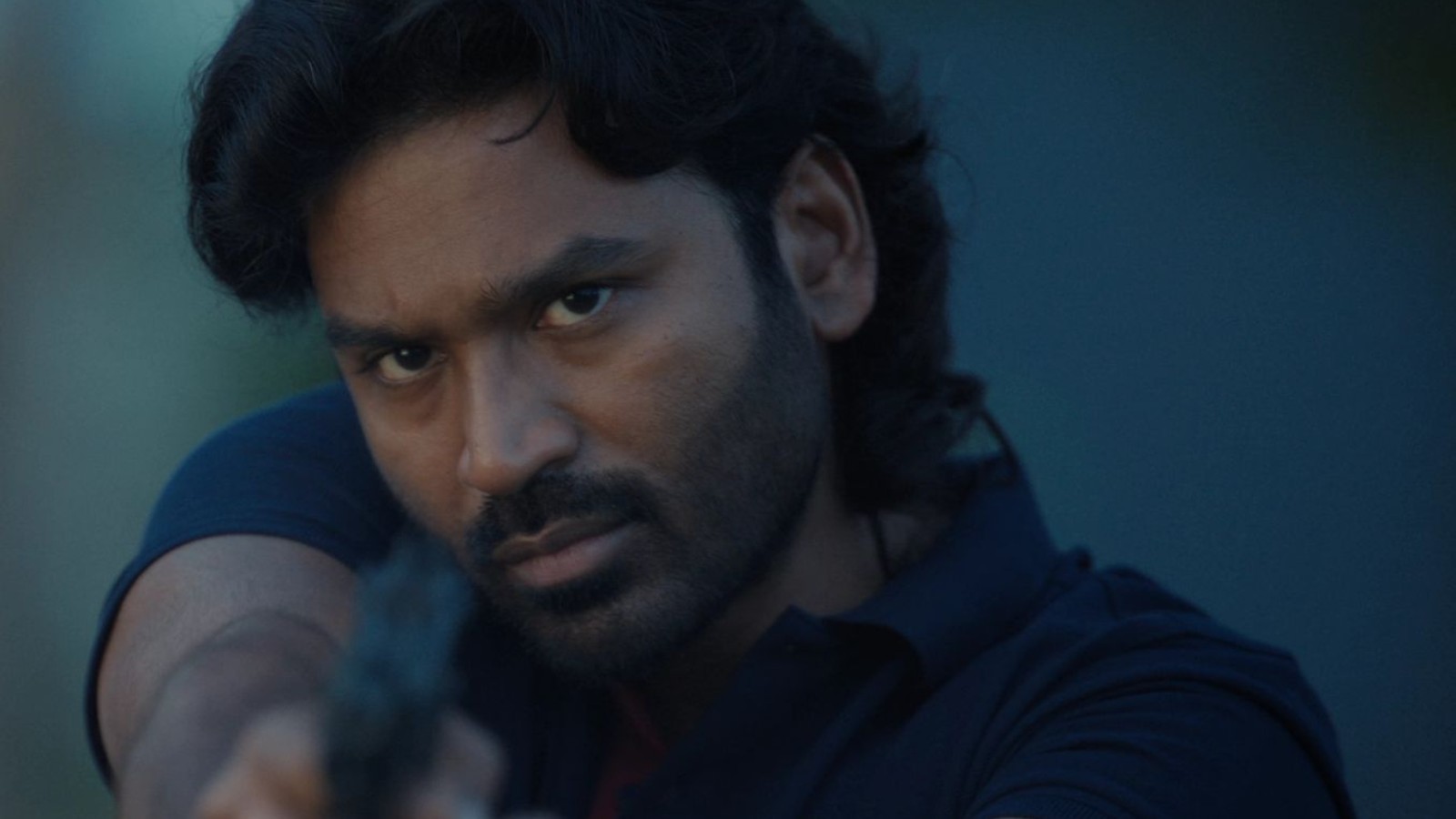
O.M – Operation Mole movie plot:
Pazhani (Dhanush), an undercover agent goes under the alias of Thirukumaran and infiltrates into Burma Karthikeyan (Mammootty)’s red sanders smuggling syndicate, as part of Operation Mole, headed by Nithya Reddy (Sai Pallavi). But when an unexpected capture leads to ruthless crossfire, costing a detrimental loss, Pazhani is forced to rethink with Nithya still at the helm of nabbing the top boss (Naseeruddin Shah) of the syndicate.
O.M – Operation Mole movie review:
When Rajkumar Periasamy made Amaran, a biopic of a martyred military officer, the film was appreciated for its loyalty to its central character and its understanding of commercial filmmaking without losing sight of its rooted reality. The subject itself offered enough scope for heroic moments without requiring cinematic embellishments. The same sensibility finds its way into OM – Operation Mole, which opens with a disclaimer emphasising that the film is not merely based on real events that happened, but also those that continue to happen. Rajkumar's filmmaking serves the subject, drawing its high points from the source material and translating them into an engaging three-hour thriller, backed by some impressive performances.
First things first. OM brings together some of the finest acting talents in South Indian cinema. Sai Pallavi plays Nithya Reddy, a firm and determined police officer who heads Operation Mole. Dhanush, an actor capable of slipping effortlessly between contrasting shades, takes on the role of Pazhani, an undercover agent operating under the alias Thirukumaran. Then there is Mammootty, whose ability to convey shock, betrayal and pain through fleeting expressions is a reminder of the actor's command over the screen. His portrayal of Buma Karthikeyan, a red-sanders smuggling kingpin, benefits from this restraint. However, considering the complicated connection his character shares with the larger narrative and the syndicate, Karthikeyan could have been written with more depth and shades. There is an interesting character waiting to be explored here, but the screenplay does not always give Mammootty enough material to fully unpack those layers. The casting is nevertheless one of the film's biggest assets, bringing together performers who can inhabit a commercial thriller without compromising their individual artistic strengths.
That said, OM begins on a strong note. Despite the barrage of location shifts in its storytelling, the film finds its footing with Dhanush's entry, staged almost as an anatomy of a riot. Using a single-shot approach, the sequence unfolds from the perspective of those chasing away the police after the latter enter the syndicate's territory to take action. What makes the sequence interesting is the way the camera shifts perspectives, capturing the mechanics of a riot and how it eventually reaches its conclusion. It is an assured introduction to the film's visual language and the world its characters inhabit.
For much of its runtime, OM follows the familiar blueprint of an undercover-agent thriller. There is the double life, the emotional turmoil, personal loss, the possibility of being misunderstood by one's own and the constant threat of exposure. None of these elements is particularly unfamiliar, and even the midway twist remains within the realm of what one might expect from the genre. Yet, the screenplay offers more than a mere checklist of undercover-thriller conventions. This is where the film finds its biggest strength: its ability to make the source material engaging through effective staging, performances and technical execution. The background score, in particular, heightens the emotional stakes without constantly demanding the audience's attention. Together, these elements make OM more than a competently assembled exercise in procedural storytelling.
However, the film's most significant presence is arguably Sai Pallavi's Nithya Reddy. While Dhanush's Pazhani is the agent placed at the centre of the operation, Nithya is the force steering it. She is not merely a character who exists to provide instructions or move the investigation forward; she has a stake in the operation and the conviction to see it through. There are slivers of her backstory told, and gladly not in a way that a conventional story wants you to feel. It is more anchoring to her arc. Sai Pallavi brings a certain firmness to the role, allowing Nithya to command authority without turning her into an exaggerated portrait of a tough police officer. Her performance is particularly effective in the quieter moments, where the weight of responsibility comes through without the need for overt displays of emotion. In a film populated by formidable performers, she holds her own and gives the narrative a steady emotional and professional centre.
That being said, one aspect that sticks out like a sore thumb is the film's attempt to inject humour through a track involving Dhanush and Sreeleela, who plays his wife. While the intention might be to offer some light-hearted moments amid an otherwise tense narrative, the humour does not always sit comfortably with the larger proceedings. More importantly, the subplot involving a potential extramarital affair raises the question of whether such a detour is necessary in the first place for the sake of humour. The film's central conflict offers enough dramatic possibilities, making this particular attempt at comic relief feel somewhat misplaced.
O.M - Operation Mole Movie Verdict:
O.M – Operation Mole is not an entirely unfamiliar undercover thriller. Its narrative occasionally leans on established conventions, Mammootty's character deserved more dramatic exploration, and its attempts at humour do little to strengthen the proceedings. But the film understands what it wants to tell and, more importantly, how to tell it. Rajkumar Periasamy keeps the storytelling largely grounded, allowing the source material, technical craft and performances to do the heavy lifting. Dhanush and Mammootty bring their respective strengths to the narrative, but Sai Pallavi's Nithya Reddy remains its most prominent and assured presence. The film does not need to be extraordinary to make its mark; it holds strong through its measured execution, convincing performances and an ability to sustain interest across its lengthy runtime. That, ultimately, is O.M's biggest achievement.