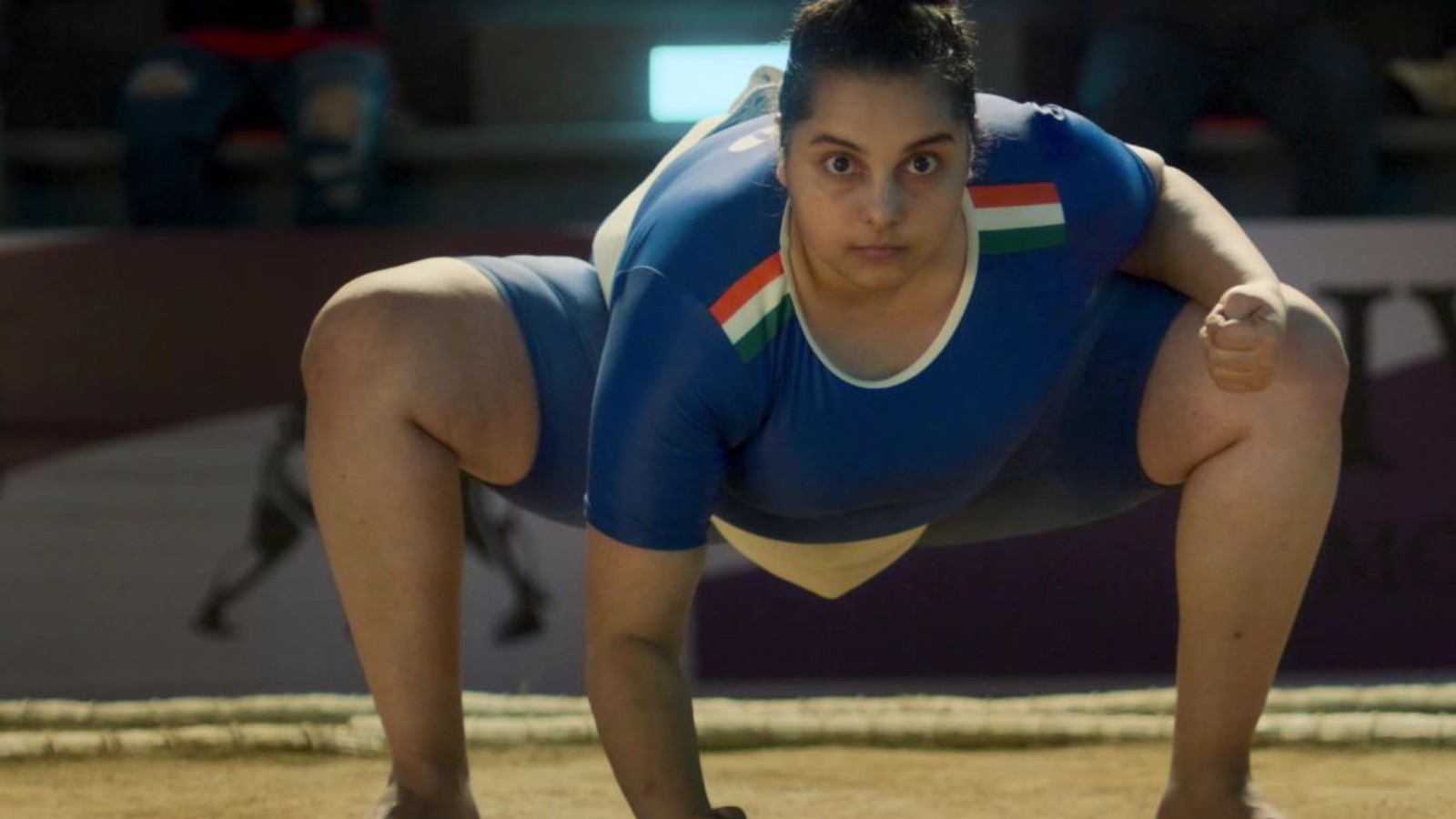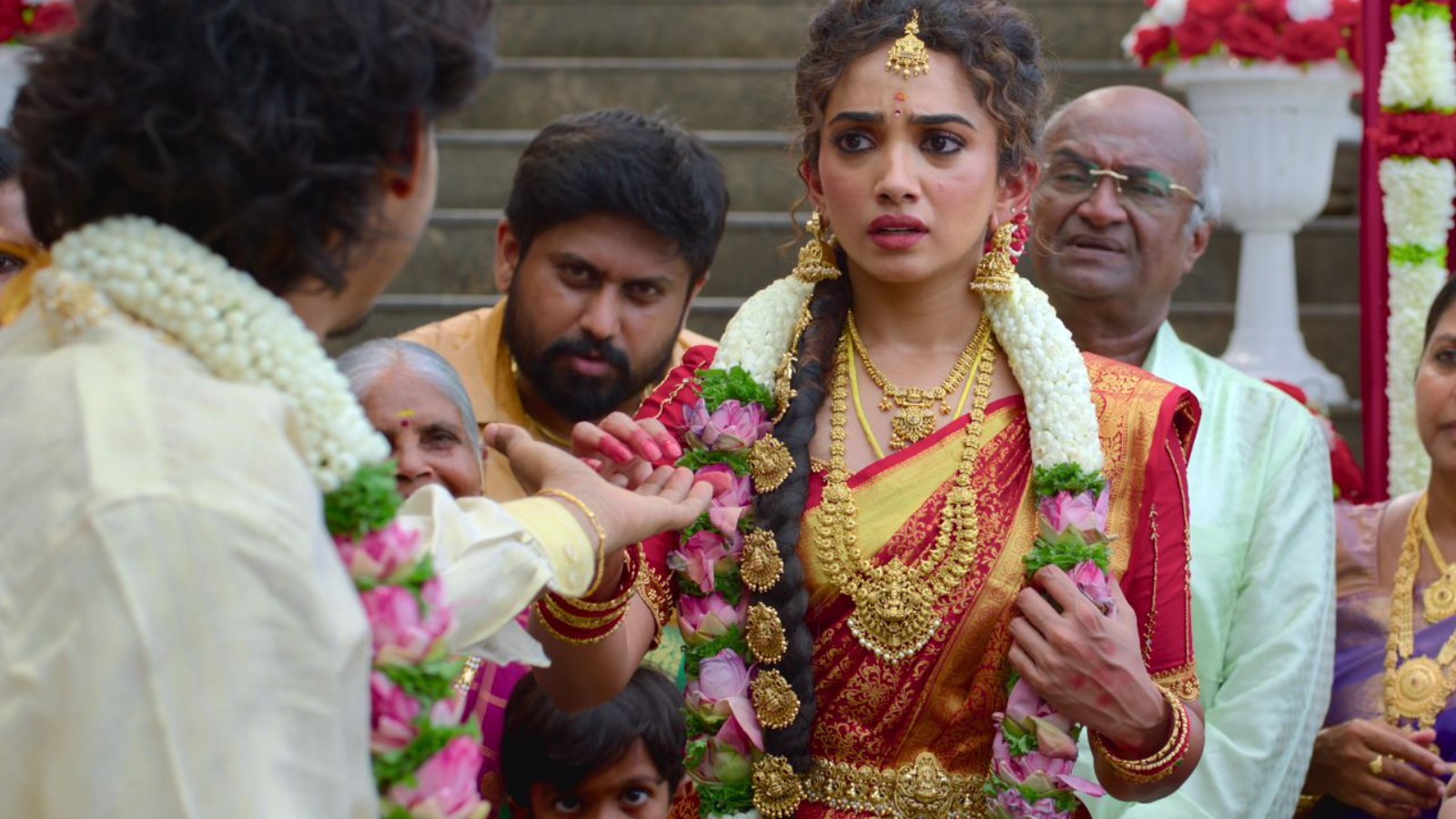
Pyaar Prema Kalyanam plot:
Elan (Elan) intentionally gets himself fired from his job in Dubai to return to India and rebuild his life closer to home. While waiting to join a new company, he meets Purple Pavi (Saanve), a social media influencer whose online persona is built around progressive ideas and relatable lifestyle content. The two quickly fall in love and get married. But just as they are about to begin their married life together, Pavi makes an unexpected decision. What follows is a comedy of domestic conflicts, role reversals and family dynamics.
Pyaar Prema Kalyanam review:
After delivering Pyaar Prema Kadhal, a romance that challenged societal expectations surrounding modern relationships, director Elan returns with Pyaar Prema Kalyanam, a film that shifts its gaze to the institution of marriage. On paper, it is an interesting progression, from questioning how couples fall in love to examining the gendered expectations placed on them after marriage. Unfortunately, while the premise can still be experimented, the execution mistakes gender reversal for meaningful commentary, resulting in a rom-com that feels juvenile, muddled and surprisingly hesitant about the ideas it wants to explore.
One of the film’s strongest observations arrives only minutes after the wedding. Pavi points out how the groom’s parents celebrated with smiles while the bride’s parents stood teary-eyed while they tied the knot, quietly highlighting the emotional imbalance that marriage traditionally places on women and their families. It is an insightful moment that hints at a richer conversation about why women are expected to leave their homes after marriage. The film even positions this as the emotional trigger behind Pavi refusing to move into Elan’s house.
Yet, instead of unpacking that discomfort, Pyaar Prema Kalyanam quickly settles for a far simpler idea, what if the husband experienced everything a daughter-in-law usually does?
From there, Elan’s life becomes a series of familiar domestic situations, only with the genders swapped. He struggles to adjust to his in-laws’ household, faces constant scrutiny from his mother-in-law, and learns the invisible labour expected within a traditional family setup. The situations are occasionally amusing, but they rarely evolve beyond their novelty. The film repeatedly asks the audience to acknowledge the irony of the reversal without discovering anything new about the system itself. The problem is that flipping roles is not the same as challenging them.
Pavi’s character suffers the most from this limited approach. She is introduced as a confident influencer whose carefully curated online presence revolves around speaking about life. A cleverly staged single-shot sequence early in the film suggests that her profession and digital identity could become integral to the narrative. Instead, once the romance begins, the influencer almost disappears.
Beyond helping her meet Elan, Pavi’s career has little bearing on the story. She gradually transforms into a conventional breadwinner whose defining characteristic is being too occupied with work to notice the emotional chaos unfolding at home. Whether she questions Elan for accepting a lower-paying job or remains oblivious to the growing tension between her husband and mother, the writing reduces her into the very stereotype the film claims to interrogate, only this time dressed in a woman’s clothing instead of a man’s.
That pattern extends to the film’s broader treatment of marriage. Rather than imagining new emotional possibilities, the screenplay simply recreates a traditional household with the husband occupying the wife’s position. The arguments, the mother-in-law politics, the expectations around caregiving and financial responsibility all unfold almost identically. As a result, the gender reversal becomes a gimmick instead of a lens for examining inequality.
The second half loses even more momentum when circumstances push Pavi into Elan’s family home, making the narrative circle back to familiar territory. Instead of complicating its central idea, the film becomes increasingly trivial, relying on repetitive domestic comedy that rarely deepens either its characters or its politics.
The supporting cast deserved far better. Geetha Kailasam, MS Bhaskar, Radhika Sarathkumar, Ilango Kumaravel and Senthil bring warmth and credibility to their roles, but the screenplay confines each of them to predictable personality traits. Their presence elevates individual moments, yet the film seldom allows them to influence the emotional journey in meaningful ways.
Pyaar Prema Kalyanam verdict:
Pyaar Prema Kalyanam begins with the promise of reimagining marriage through a fresh, contemporary lens but ultimately settles for a surface-level role swap. Its observations about patriarchal traditions are valid, and its premise offers enough room for both humour and introspection. However, by equating gender reversal with gender commentary, the film stops short of asking the harder questions it initially raises. What remains is a light-hearted romantic comedy with flashes of insight, but one that never quite transforms its clever idea into a compelling statement on modern marriage.