3
/5
TCP Score
😐 Average
Spider-Noir story
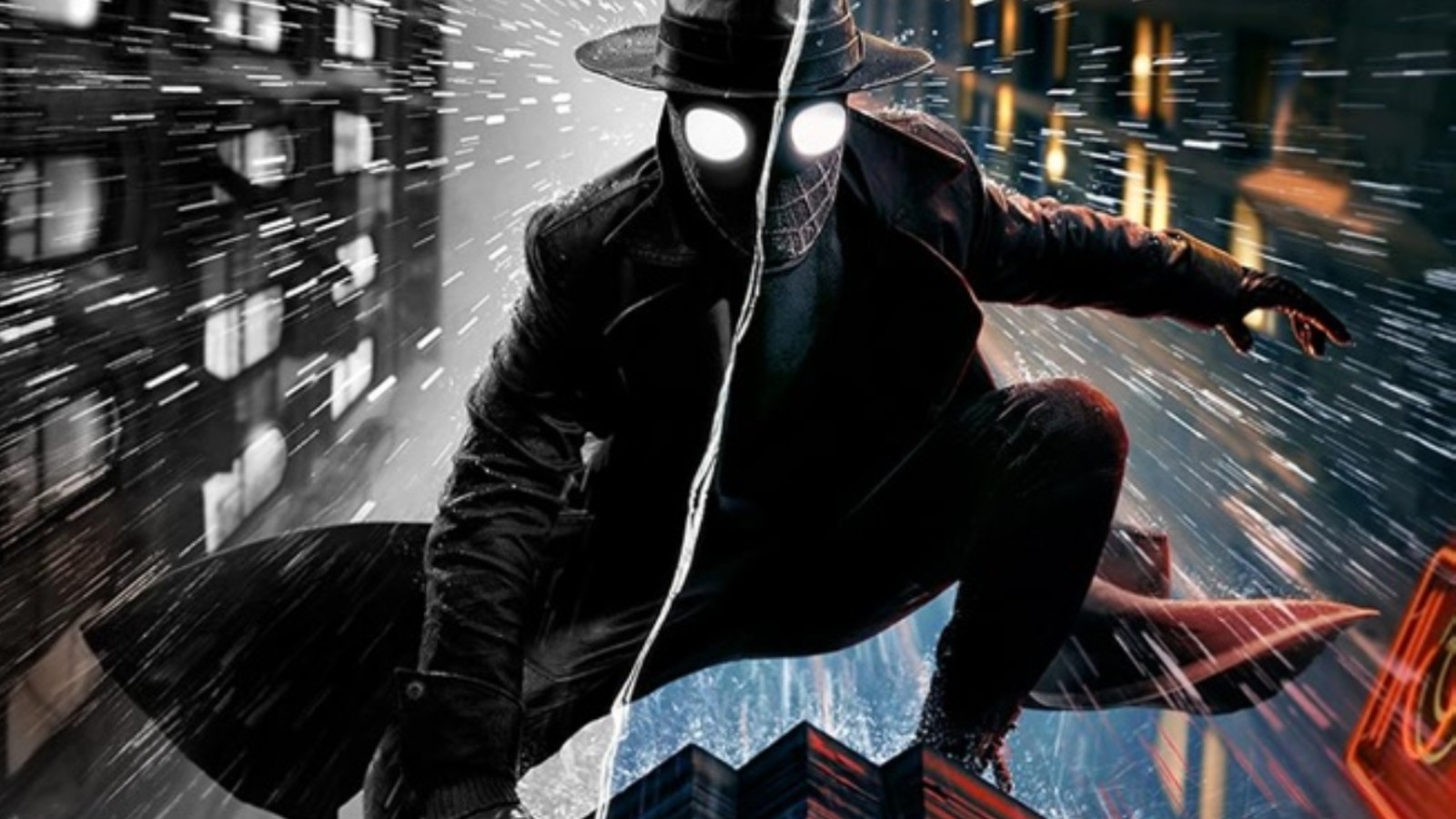
Spider-Noir takes place against the cynical, gritty background of 1930s New York City, following a down-on-his-luck private detective forced to confront his past as the city's lone superhero. Nicolas Cage's portrayal shifts the focus from the vivacious, wisecracking youth of standard lore to a weathered, greying investigator navigating a severely corrupt metropolitan environment within a hard-boiled, black-and-white parallel universe. Taking on a challenging new case forces him to face his diminishing reputation, his personal shortcomings, and a growing criminal underworld looming over his broken existence.
Spider-Noir review
The version of New York City crafted in Spider-Noir instantly transports you to 221B Baker Street. My very first thought while watching the premiere episode was a strong sense of déjà vu tied to the Benedict Cumberbatch-led Sherlock—a series still deeply etched in the hearts of many.
Here, we have the legendary Nicolas Cage stepping directly in front of the camera after voicing Spider-Man Noir in the Spider-Verse animated franchise. It’s a brilliant casting coup, given Cage's chameleonic ability to embody absolutely any character. While he shines in the titular role, viewers will have to wait a bit to see his trademark eccentricities fully unleashed.
Spanning eight episodes, Spider-Noir gets off to a breezy start by utilising a familiar superhero template: a hero hanging up his cape—or rather, his woolly mask—after failing to save the love of his life. Now running a detective agency under his original name, Ben Reilly, he struggles to make ends meet and pay his assistant until a fateful day changes everything.
Flashbacks reveal his early days as "The Spider". Believing he was the city's only superhero, he became a vigilante to fight New York's criminal underbelly, quickly becoming a public favourite before his downward spiral.
I watched the series in "True-Hue Full Colour" while occasionally switching to "Authentic Black & White" for select scenes. The visuals are glossy and beautifully capture the intended mood. However, I just couldn't shake the Sherlock comparison. Even the title sequence heavily echoes the 2010 British drama, though it features a distinct and evocative theme song: "Saving Grace" by Kirby.
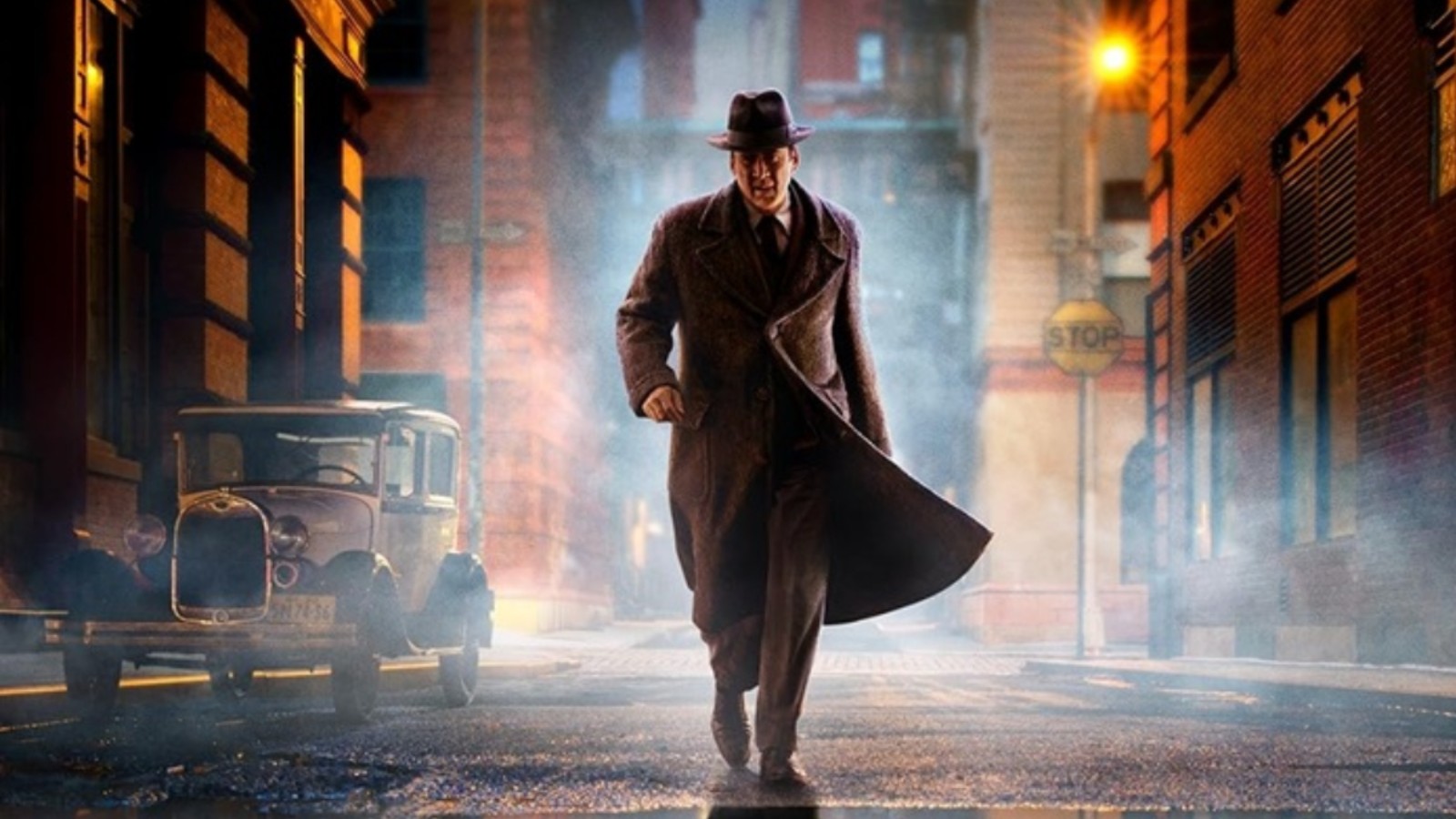 Nicolas Cage in Spider Noir
Watching all eight episodes in one sitting reveals that the first four function primarily as fillers to introduce other superhumans. These characters are familiar fixtures of the Spider-Man universe, including Flint Marko/Sandman (Jack Huston) and Dirk Leydon/Megawatt (Andrew Lewis Caldwell)—the latter possessing powers similar to Electro, though with more defined limitations.
Fortunately, the backstory behind Reilly's transformation into The Spider is genuinely intriguing, smartly dodging the traditional spider-bite trope. That particular revelation is quite shocking, and it’s where Cage finally taps into the raw performance energy he is famous for.
Unfortunately, the payoff takes a while to arrive, and the narrative occasionally bogs down in an overstretched "heroes vs. villains" mobster subplot that feels a bit too safely confined to standard tropes. Brendan Gleeson steps in as the mob boss Silvermane, but despite his best efforts to be menacing, the character ultimately deflates into one of the show's least serious threats.
A Note on the Visuals: While explicit violence and gore are limited, a few jarring moments will certainly stick with you—most notably an injection needle jabbed into an eye and a human mutant’s grotesque transformation into a spider.
On a brighter note, the show offers a refreshing subversion of Daily Bugle lore. While we are used to J. Jonah Jameson serving as Spider-Man's primary media menace, Spider-Noir shines a spotlight on Robbie Robertson, played brilliantly by Lamorne Morris (following Bill Nunn's iconic portrayal in Sam Raimi’s trilogy). As a fan of Morris, I found his performance to be a delightful addition, bringing much-needed relief and charm to the narrative.
However, given that the series is set during the Great Depression of the 1930s, it’s surprising how little the show engages with the era's predominant racism—it is briefly touched upon in only a single scene. This feels like a missed opportunity given the prominent inclusion of Black characters like Marko and Robertson, alongside an Asian character, the seductive nightclub singer Cat Hardy (Li Jun Li).
Creator Oren Uziel clearly designed this series as an absolute showcase for Nicolas Cage, and it delivers. Cage’s performance quirks—including his physical commitment to the role, like curling himself up like an actual spider during his early transformation days—are a total treat to watch. While we usually only get two hours of Cage on the big screen, Spider-Noir gives us nearly eight hours. Does the show do him justice? For the most part, absolutely.
Ultimately, the series plays it a bit too safe, even when touching upon US history dating back to World War I. It functions best as a detective noir, but when it pivots into standard superhero territory filled with mutants, the stakes feel rushed and insignificant.
Spider-Noir is well worth a watch for Cage's performance and a handful of strong supporting turns, but it struggles to become the cultural phenomenon of its predecessors.
Spider-Noir verdict
Spider-Noir, the gritty investigator series triumphs largely because of Nicolas Cage's unwavering dedication and an exquisitely moody aesthetic. Although the distinctive period backdrop and innovative genesis angle yield superb potential, the plotline frequently stalls due to predictable formulas and unnecessary padding.