Bandar Story:
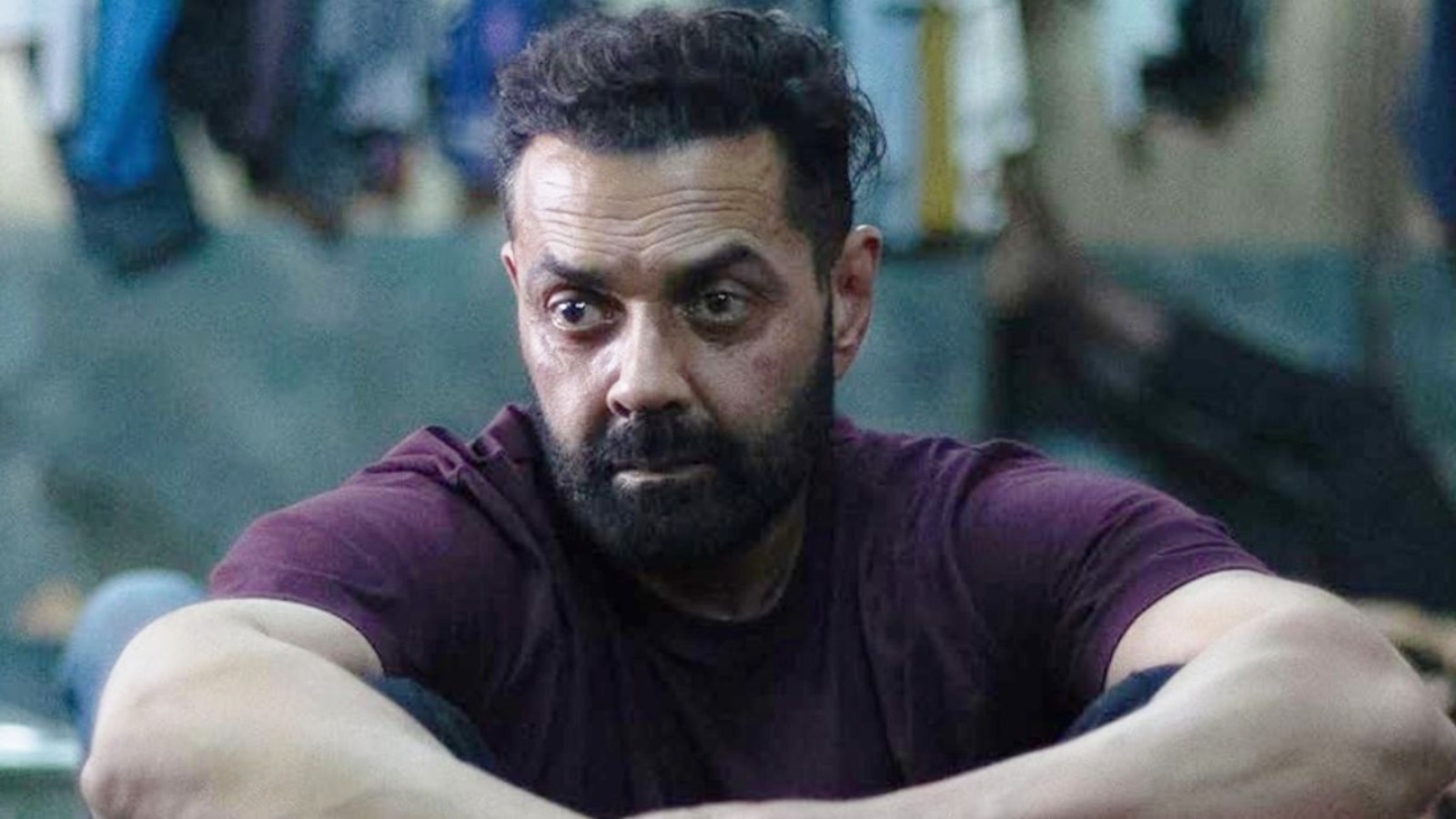
Bobby Deol plays Samar Mehra, an aging TV star, whose fame and relevance is hanging by a thread. Exhausted financially and physically, his only sense of sanity lies in his relationship with his much younger girlfriend Khushi (Saba Azad) and the equation he shares with his sister Suhani (Sanya Malhotra), who is at her wit’s end with him. His life takes an ugly turn when the police show up at his doorstep and arrest him on charges of rape, levelled by his ex-girlfriend Gayatri (Sapna Pabbi). He is now facing trial and whether proven or not, the system has declared him guilty. Bandar further delves into the complexities of gender politics and the perils of privilege.
Bandar Review:
Written by Sudip Sharma and Abhishek Banerjee, Bandar, which is also co-directed by Sakshi Mehta Lau, is scarily one-sided in its portrayal of a man battling a flawed legal system, while under trial. In the initial proceedings of the film, it is evidently established that Samar (Deol) is an unlikeable man, who cannot get over himself. A conversation over coffee with his girlfriend Khushi (Azad) displays his inherent insecurity and his staunch refusal to evolve. But once he is handed over to the clutches of the law, director Anurag Kashyap almost begs the audience to strictly empathise with Samar, with little to no allowance in understanding the perspective of the accuser Gayatri (Pabbi).
Despite a background being provided about what transpired between Samar and Gayatri, the latter’s perspective barely explores fragments about a broken home and suicidal tendencies. Not that it should serve as an excuse for the allegations hurled, but Samar’s own accountability in pushing Gayatri to the extreme, is barely questioned. A mere acknowledgement of the same in the eventual climax, simply comes across as tokenism.
Sadly, this gaze is only further extended during Samar’s time in prison. Inmates are quick to offer solace to Samar that he isn’t alone in facing false charges, with views ranging from character assassination to the description of women’s clothing and their varying sizes. Yet, it is the prison portions that keep the viewers invested. It becomes excruciatingly heart-breaking to watch Samar’s ordeal as his identity and existence are no longer guaranteed by the marker of success, fame, good looks or merely being a man in a man’s world.
The cops, played by Jitendra Joshi, Nagesh Bhonsle and Jaimini Pathak, aptly represent the familiar sliminess known, where the police show little to no regards for privacy or empathy. Indrajith Sukumaran, as senior inmate Lijo, who also describes himself as ‘IPC barring the charge applicable to Samar’, isn’t necessarily intimidating but offers a commanding presence. Raj B Shetty, who is credited as Lizard Man, offers an obligatory song and dance appearance, and then ceases to exist in the narrative. Sukant Goel as Aatish, who is also facing a false allegation of rape, appears believable when pleading his innocence. Riddhi Sen, who plays Samar’s lawyer Nitin Mukherjee, is earnest while seeking legal reprieve for his client.
The women in the narrative largely serve as catalysts to Samar’s story. While Saba is expectedly confident, Sapna carries vulnerability and control in equal measure. Sanya, while offering a delightful presence, has fairly little to do even as her frustration with both the law and her brother, is palpable.
Eventually, Bandar emerges as a Bobby Deol show and surely, the actor makes a meal of it. Given that his own career has been through a similar trajectory, Bobby offers a riveting performance displaying emotions varying between despair, desperation and dread. Watch out for him in a scene, at an airport, where his presence seeks validation from the paparazzi.
Bandar verdict:
Bandar could’ve grabbed the opportunity to reflect upon the disparity of a legal, social system that is flawed and where fairness is an alien concept. Even if you stan Kashyap’s filmography, you’d be naïvely optimistic to argue that the director hoped to bust the myth or ‘bubble’ (yeah, one can take a shot for everytime someone utters the word in the film) surrounding male privilege. Sadly, Bandar stops Kashyap in his tracks. Similarly, his sister-filmmaker Anubhuti Kashyap is guilty of meting out the same treatment with her directorial outing, Accused, earlier this year, where the narrative dangerously stands to negate the accounts of women, who’ve survived their trauma and are still seeking closure and justice, in a post MeToo world. Although, to be fair, Bandar is strictly watchable for its leading man.