There's a scene in the climax of Rajkumar Hirani's Sanju (2018), where Winnie (Anushka Sharma), who plays Sanjay Dutt's (Ranbir Kapoor) biographer, names the title of his book as {Kuch Toh Log Kahenge". She mentions that this was Sunil Dutt's (Paresh Rawal's) favourite song, making it an apt title for his son's biography. Well, this pretty much sums up the whole plot of Sanju: at the end of the day, it was not just a biopic on Sanjay but largely his complicated relationship with his father, Sunil Dutt. While watching Michael in a packed IMAX theatre, this is what came to my mind, not just once, but constantly. How is it that filmmakers think of an icon in any form and create baggage for the family to push the narrative of the singular person?
There's no comparison between Michael Jackson and Sanjay Dutt, except for the fact that both are artists born only a year apart. However, when it comes to their biopic, the makers explicitly decided to make the storyline based on the daddy issues rather than the person they have been throughout their life. Michael begins the story in 1966 when the Jackson 5 become a band under the guidance of their father, Joseph Jackson (Colman Domingo). He is a strict fella who doesn't let his boys study and makes them rehearse during school nights. Even if they are praised in the outside world, with seven-year-old MJ (Juliano Krue Valdi) leading the vocals, he gets whipped by his dad for a minor mistake as punishment, which doesn't stop even into his late 20s.
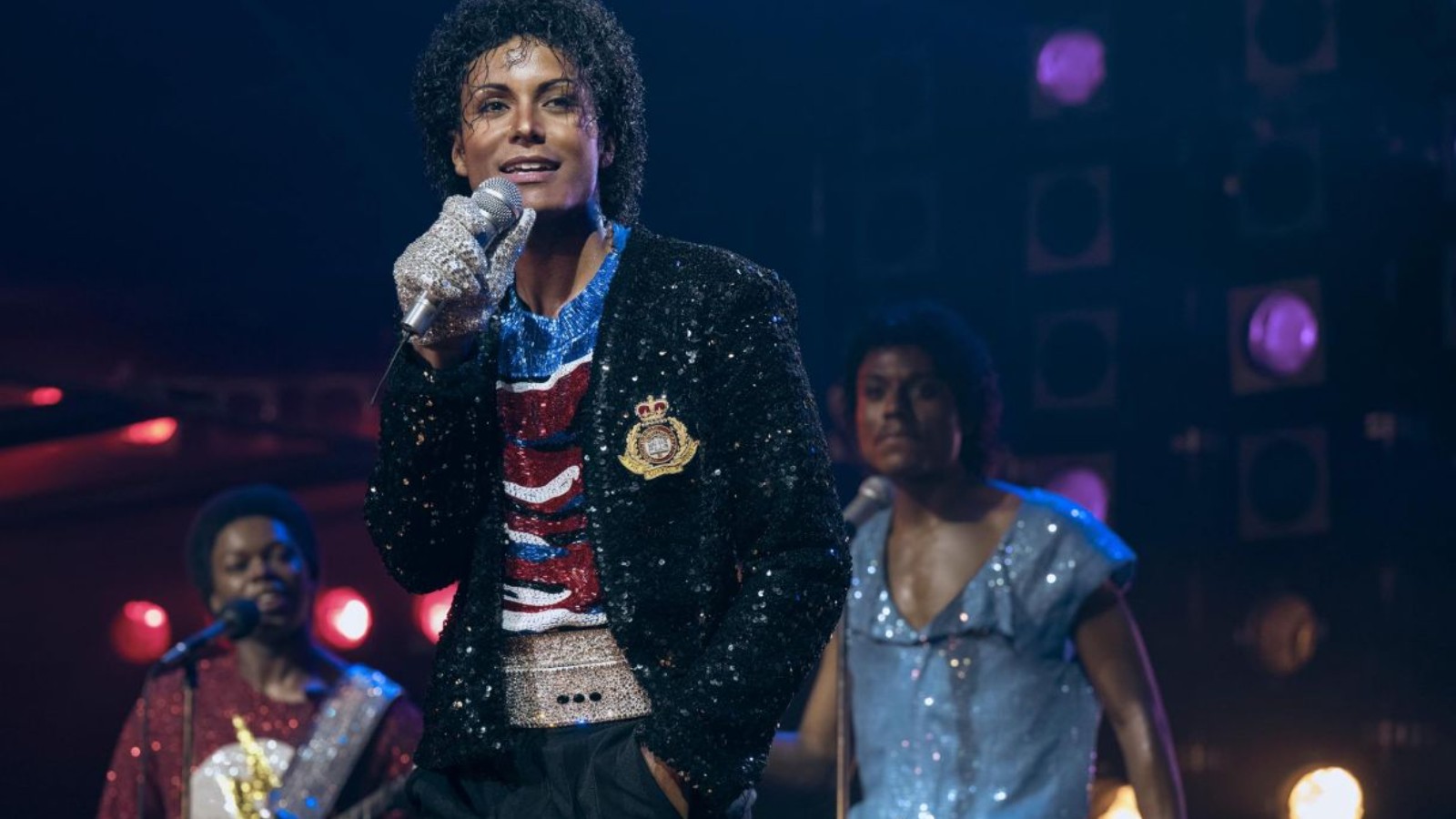
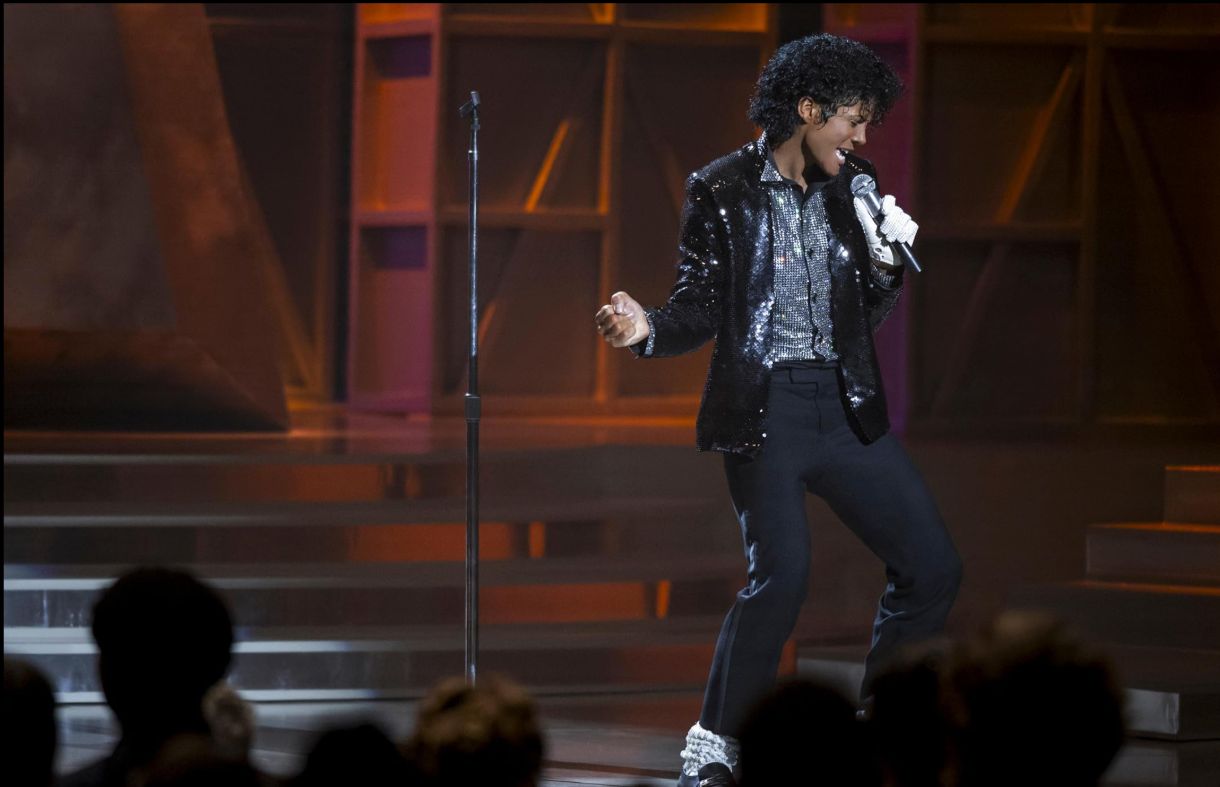 Jaafar Jackson in Michael
When you think of Michael, you know his journey, which is well-documented in the media – growing up with his brothers and being in the public eye to ultimately become the greatest artist this planet has ever seen, or probably ever will see. There were people outside his small house in Gary who knew his potential and gave him a boost, [and] they knew he could become something unimaginable with his solo act. However, as a father, Joseph saw him just as a part of the Jackson 5 and nothing beyond it.
The daddy issues that serve as a backdrop are crucial, but I am left with many questions about how they became a story larger than the persona of MJ in the film. The MJ I watched while growing up created music videos that told stories, drawing from his personal experiences and reflecting on the ongoing atrocities around the world.
Here, of course, we see the backdrop of Beat It and Thriller and how they created an uproar when people not just listened to them but when the music videos came out. The impact of those music videos is so fleeting that it seems insignificant, contrasting sharply with the profound emotions they evoked in reality.
In every instance we see Joseph having a rave reaction to everything that MJ does, be it getting his nose surgery or even when millions cry at the stadium while watching him perform. There is a scene where MJ (Jaafar Jackson) fires his father as his manager via fax, and that moment is prolonged to the point that it feels irrelevant.
Of course, you have MJ's nephew playing him on screen and the whole Jackson family sitting behind the camera and taking charge of the situation. However, a person who had faced significant controversies throughout his life and was unapologetic about many aspects did not need to emerge as a star in the film solely by being stoic and minimally reactive to situations that were beyond his control.
For instance, I'm sure that after the Pepsi commercial, while MJ was being treated in the hospital, his father would have insisted that he needed to perform, disregarding the fact that his son suffered from nerve damage and would face lifelong consequences. However, we only see MJ devising a larger plan while facing his father's harassment, which is depicted through close-up reaction shots of Domingo struggling to accept that his son made a life decision without considering his family.
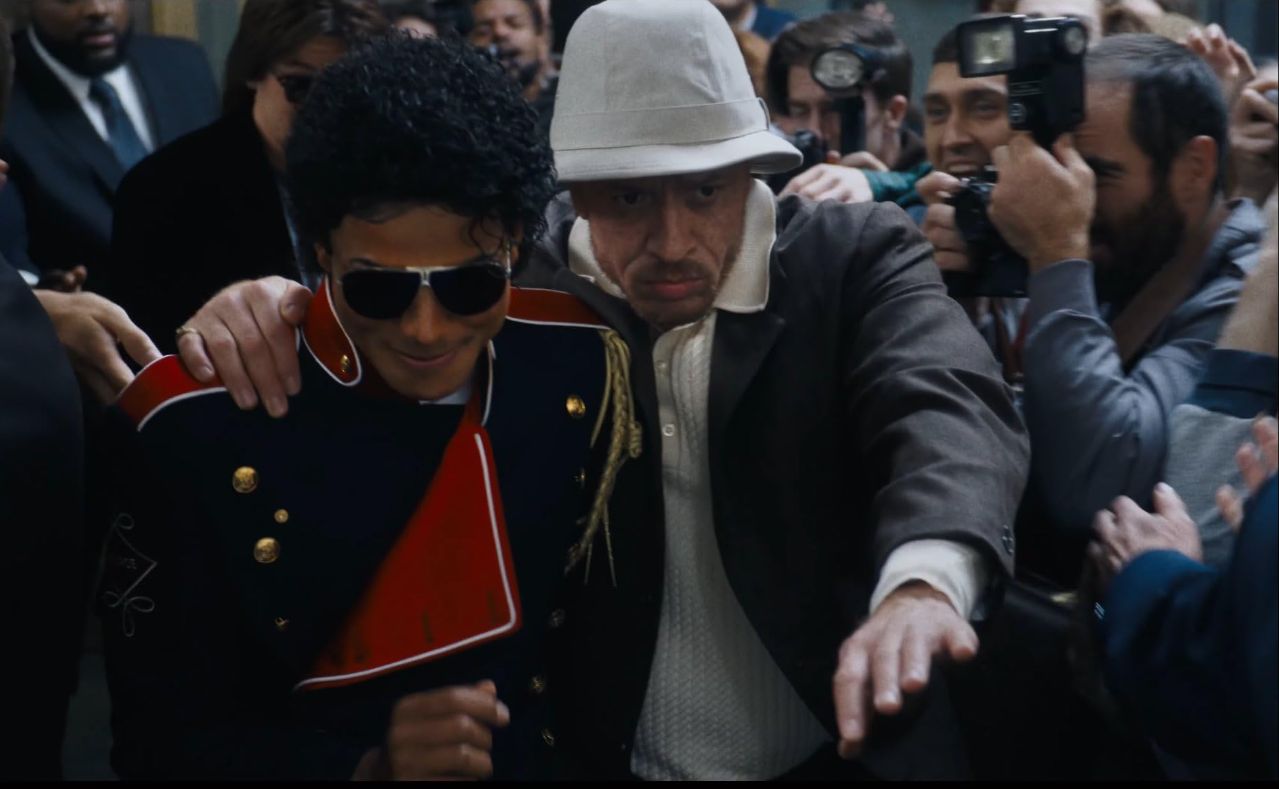 A still from the film Michael
In yet another scene, during a private conversation, Joseph curses MJ and says that he has to remember his family at every point in his career. I wondered if it was a biopic on Joseph rather than MJ because the rise of the "King of Pop" was supposed to create an impact on the world, but here it felt like the portrayal was more important to show how it affected his strict father.
MJ was known to go against the tide and create a universe that not only breaks stereotypes but also creates records with every step he takes. It's a known fact that he perfected Moonwalk and spoke about how he committed a mistake while performing on stage. However, the scene is so distracting because Joseph publicly calls his son a money-making machine, immediately overshadowing him.
We hardly get Jaafar to bring a solo shine moment to the character because it's always carried with the baggage of "What would my daddy say?" He had to go solo and seek permission from his father. He relies on external factors to handle difficult situations for him, making decisions for a wide range of issues.
MJ was not just a survivor of abuse from the hands of his father but so much more that cannot be captured in two hours of runtime. Of course, the film ends with Bad Tour 1988 in London, because the real story begins after that. The film does hint at a sequel, which should happen, because this is not the MJ story that this generation deserves to know.
I was drawn by Jaafar, whose emulation of his uncle was near perfection. With mannerisms and voice modulations, everything made me feel like MJ was right there and living it all again. However, he could do justice to this one-dimensional character here because the artist is Michael Jackson, but the story doesn't help him elevate well apart from the persona that he picks up, like a smooth criminal. The character limits the depth of his performance and fails to showcase the complexity of Jackson's artistry, which includes his innovative dance moves, emotional range, and ability to connect with audiences on multiple levels.