Karuppu movie plot:
Baby Kannan (RJ Balaji) is a powerful lawyer who has the court under his control. He not only understands how law works, but also every pawn in the judiciary system. So, when he wins every case through hook or crook, Baby Kannan’s ways are challenged through the divine intervention of local deity Karuppu (Suriya) and upright lawyer Preethi (Trisha).
Karuppu movie review:
Saami padam, a genre that is deeply rooted in Tamil cinema, thrived in the 90s and early 2000s. With its blend of sentimentality, emotions, family drama, reinforcement of belief systems, and a direct good-versus-bad template, the genre constantly found support among audiences for its conviction and audacity. In RJ Balaji’s Karuppu, which looks like a spiritual successor to Mookuthi Amman, he turns Suriya into the deity himself, one who unleashes “just God things” and even delivers justice to a pei (ghost).
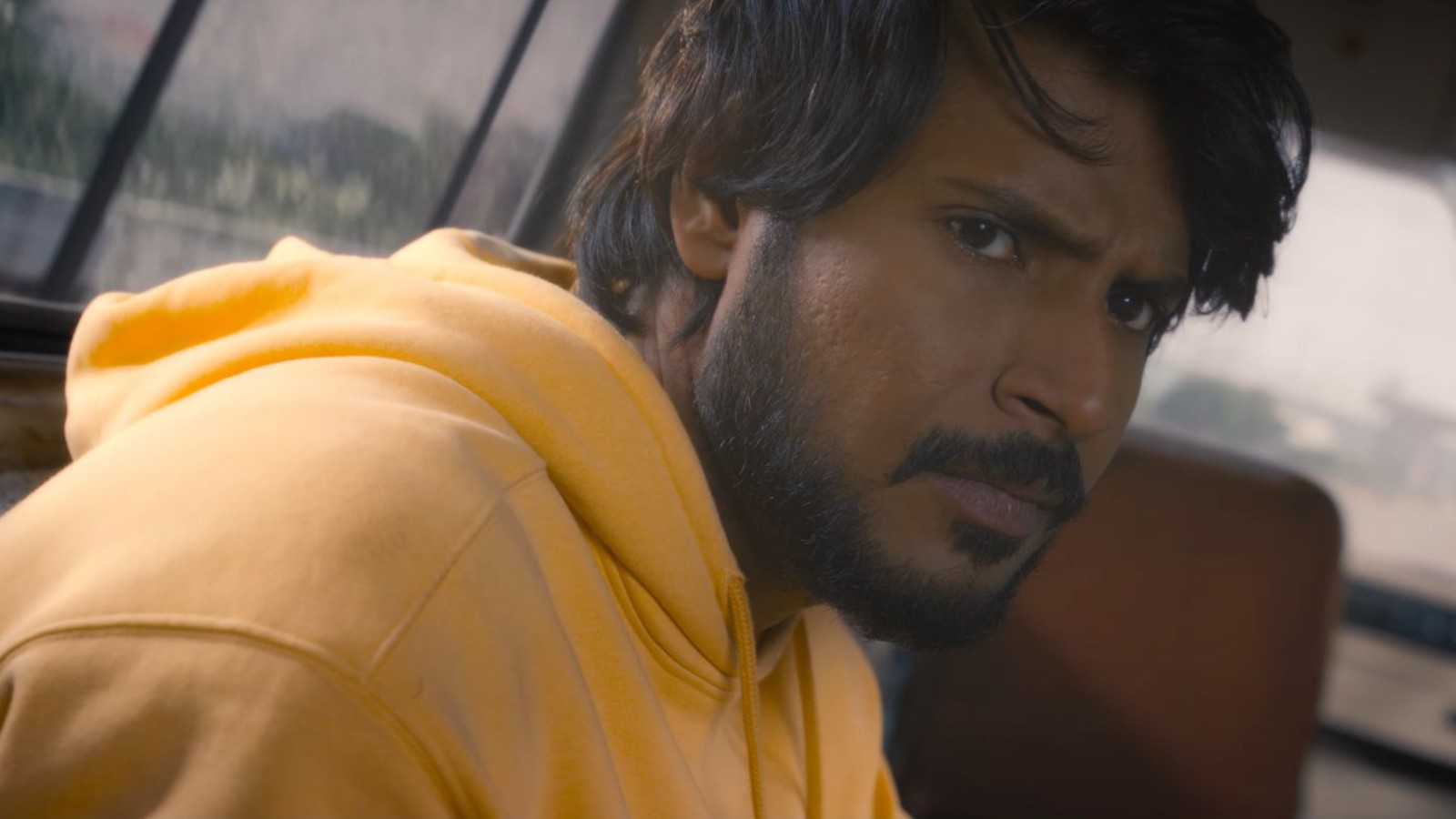
 Suriya in Karuppu
Karuppu begins with a fantastic setup, showcasing the internal workings of a court. Beyond the “My Lords” and truth-oath-taking moments that cinema usually associates with courtrooms, the film explores the case of Sukumaran (Indrans) and his daughter Binu, who travel from Kerala to Chennai to treat the latter’s liver failure. Their jewels get stolen and are later retrieved by the police. But Sukumaran and Binu’s real struggle begins there, as the duo must endlessly participate in the daily proceedings of their Return of Property case to reclaim their belongings. Baby Kannan handles their case, and what follows is an episodic courtroom drama that slowly exhausts the father and daughter, thanks to the Indian judiciary system’s red-tapism and exploitative legal fraternity.
Enter the divine intervention of Vetta Karuppu in the guise of Saravanan, who challenges Baby Kannan’s way of functioning. Or rather, it is the other way around, when a God-fearing Baby Kannan, ready to close Sukumaran’s case through shortcuts, is reprimanded by Karuppu. In turn, Baby Kannan challenges Karuppu to refrain from using divine powers and still instil justice, paving the way for an interesting conflict between God and the system. But despite such a compelling premise, Karuppu fizzles out and becomes confused about handling its own conflict, eventually going all over the place.
Suriya as Karuppu gets multiple heroic-entry sequences, Mocobot-steered action scenes, and an abundance of slow motion. It makes Karuppu a film that constantly wants the audience to remain in a trance state, purely through the visualisation of how massy and heroic the stunts can get, aided heavily by technical flourishes. Amid all its visual prowess and dramatic staging, however, the film misses the chance to deeply explore its core idea, that God wants to prove humans can triumph with nothing but truth and authenticity. Instead, what follows is Suriya operating entirely in God Mode.
On the other hand, Karuppu also feels like a story centred on Baby Kannan, a man who knows how the system functions, with God merely playing the hero in a villain’s story. There is little in the screenplay that truly sticks to its thematic conflict, and more emphasis is placed on visual storytelling. After a point, the film begins to feel like a missed opportunity for writing brilliance.
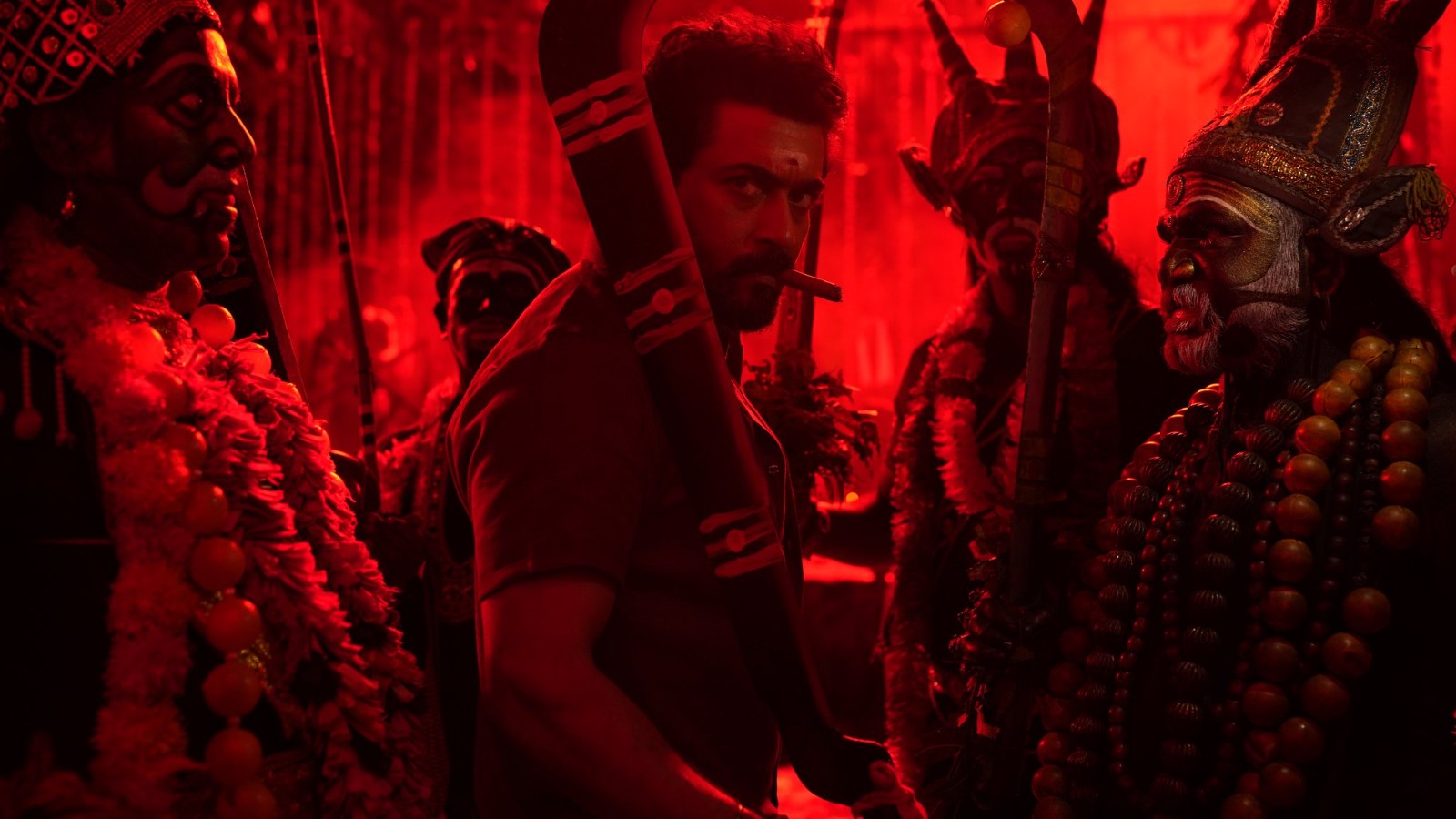
 Suriya in Karuppu
Nevertheless, for fans of Suriya, Karuppu undoubtedly celebrates him grandly onscreen. There are plenty of stunt sequences that can make his followers feel he need not even be a deity to be worshipped, not to mention the callbacks to songs from his previous films. It is an interesting choice when shades of the angry young man Michael and the socially conscious lawyer Chandru are evoked through the background use of songs Jana Gana Mana from Ayutha Ezhuthu and Manniley Eeramundu from Jai Bhim.
However, despite all that, Karuppu has little interest in truly writing Vetta Karuppu as a character. As much as the film details Baby Kannan and his way of life, it only uses Karuppu, and by extension, Suriya’s star power, for heroic shots, massy filmmaking, and fan service. This makes the film feel less humanised, and for a story centred on devotion and divinity, the overwhelming star worship further cloys the narrative. Perhaps the film also can make you feel that nothing apart from divine intervention can bring justice. That said, Karuppu still retains the satire RJ Balaji is known for. A prime example is the recreation of the famous chocolate coffee scene from Leo, which surprisingly works well within the narrative and even adds value to the story. But such sporadic sparks eventually wither away within the film’s mass-heavy packaging.
Karuppu movie verdict:
Karuppu is an extravagantly mounted courtroom drama with divine intervention at its core. The excessive focus on heroism dilutes the story’s potential. Despite losing sight of its central conflict midway, Karuppu still manages to stay afloat with its entertainment quotient.